How to make your own natural home-made toothpaste
Two recipes without coconut oil or baking soda —
and an honest account of fluoride before you decide
First and foremost, I would advise you to speak with a few dentists and experts about natural toothpaste. This text is my own experience, not professional advice.
The main problem with home-made toothpaste is that it contains no fluoride. I write about that at the end, honestly and with everything I learned along the way.
There are two recipes, both without coconut oil or baking soda. One is a paste, the other a powder.
Before you decide
Fluoride is the subject of a great deal of dispute. Some hold that it is essential in dental care, others that it does harm. The difference between using it and not using it takes a long time to show on teeth, and tooth problems are not minor ones.
There are too many variables in assessing anyone’s oral health — genes, diet, dental hygiene, flossing and so on. That makes it difficult to pinpoint where a problem comes from. It is not a subject to take lightly, so do your reading before you decide.
Never put your health behind your zero waste goals. None of us can live entirely waste-free anyway, and health problems create far more waste than we would ever save.
Both recipes are without coconut oil and without baking soda. Baking soda is excellent at neutralising the acids in the mouth, but it can be too harsh for enamel; if you do use it, keep it under five per cent of the whole recipe.
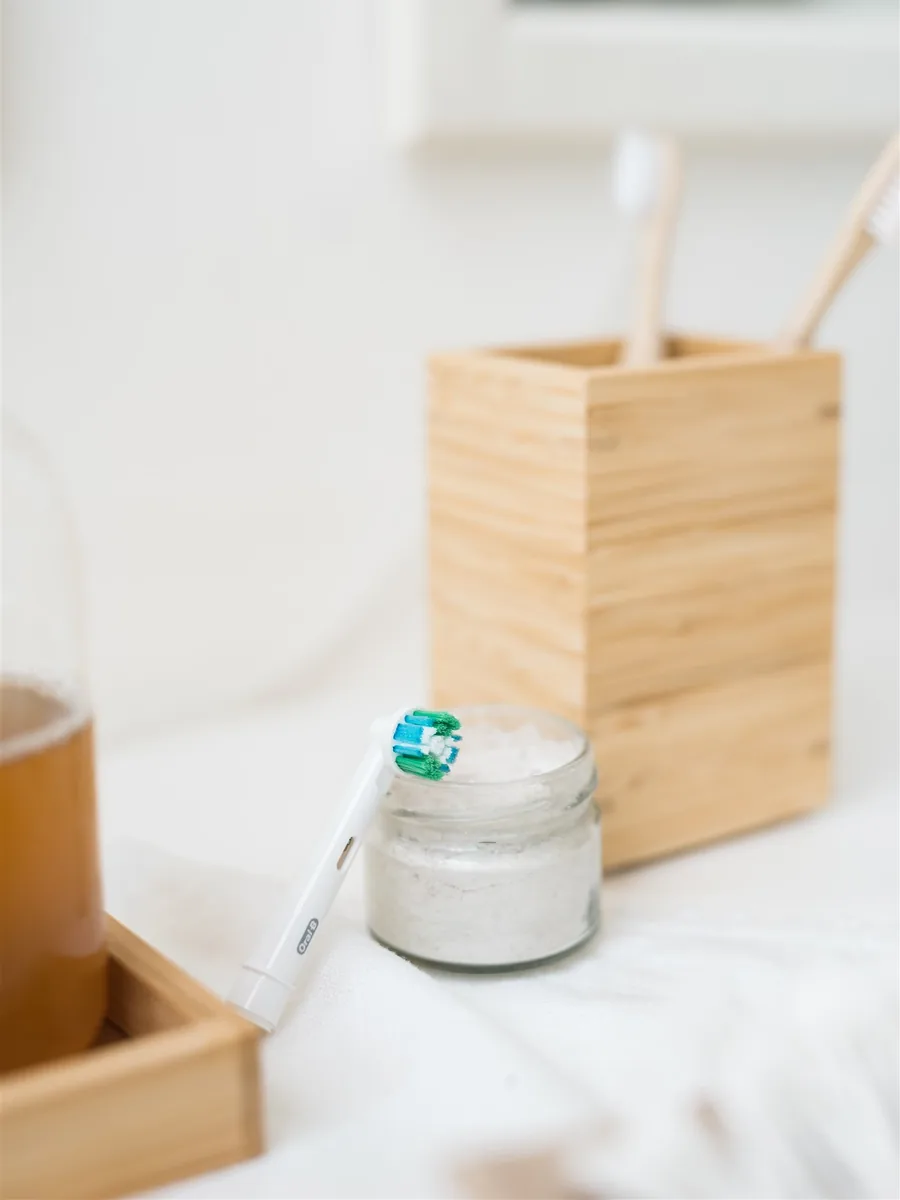
The first step is to find a small jar you already have at home and can reuse for the paste.
Toothpaste with mint
Ingredients:
- Calcium carbonate (chalk) — 22 g / 5 tsp
- White clay — 22 g / 5 tsp
- Mint essential oil — 2.22 g / half a tsp
- Water — 5 g / 2 tsp, or more if it is too dry
The steps
Step one. Mix the dry ingredients.
Step two. Add the mint essential oil.
Step three. Add the water slowly and stir until the mixture is fine and smooth.
Tooth powder
Ingredients:
- Kaolin clay — 17 g / 4 tbsp
- Cinnamon — 4 g / 1.5 tsp
The steps
Mix both ingredients and the powder is ready to use.
My experience with fluoride
I am not sure I have ever seen as much dispute as on this subject, and to cut a long story short, I still do not know whom to believe. I asked three dentists and one doctor, and the result was a two-all tie. Some argue it is essential, others that brushing and flossing are all that count. Here is how it stands, and how it went for me.
Fluoride strengthens the enamel, which is under constant attack from oral bacteria that create acid and cavities in the mouth. It is a naturally occurring mineral found in food, water and dental hygiene products, and our own bodies produce it in the form of calcium. Like any other vitamin or mineral, in large quantities it can cause neurological, reproductive and cardiovascular problems. In the quantities available to us it ought to be acceptable. The group opposed to fluoride argues that even small levels are dangerous.
What shocked me most was realising I had been brushing my teeth wrongly my whole life. For fluoride to work, the paste must not be rinsed away after brushing, exactly as they do it in films. I have never once done that — every trace of toothpaste, and I mean every trace, was always rinsed off. I was essentially in no-man’s-land: not using it properly, yet still getting a small amount, and everything was fine.
By the time I began looking into this, I had already gone two years without fluoride in my natural paste. Out of concern I tried to bring it back by buying fluoride at a pharmacy and mixing it in, but I was told that is not possible — only large pharmaceutical companies can do it, and you cannot buy it online either. If fluoride were that important, I believe it would be widely available, the way vitamin B12 is.
Fine, I will get it from the tap water, I consoled myself in front of my dentist. I can even hold the water in my mouth longer, rather like oil pulling. He simply laughed and waved it off, despite some sources online claiming you get a quarter more fluoride that way.
As things stand, we have been using natural fluoride-free toothpaste since 2014, my husband and I are both fine, and I cannot bring myself to go back to shop-bought ones. Again, with all those variables, what works for me need not work for you; this is our decision for now. For the last four years we have eaten fairly cleanly, whole foods only, without processed food, sugar, coffee or alcohol. Genetics play a large part too, so it is very much individual.
All that said, if fluoride became available at a pharmacy tomorrow, I believe I would put a small percentage into my paste.
Where to go next
In the bathroom the paste sits alongside an emulsion for removing makeup, and for the room itself there is bio-enzyme. Every text sits on the zero waste page.
In the KonMari method the bathroom belongs to komono and is deliberately left towards the end.
Want less waste in the bathroom?
I offer zero waste consultations in Zagreb and the surrounding area. Book a free 20 minute call and we will find your starting point.