Six kitchen replacements for a waste-free life
Replacements that are easy to make and easier still to keep —
one at a time, as the old thing wears out
The kitchen is where a home produces waste fastest, which makes it the place where a change shows soonest. You only have to look at how much rubbish leaves it in a week.
The six replacements below asked the least of me and made the most difference. None of them requires throwing anything out today — each one comes into play when the old thing wears out.
If the idea is new to you, begin with what the zero waste movement is. The five rules are there, along with the reason any of this is worth doing.
First replacement — straws
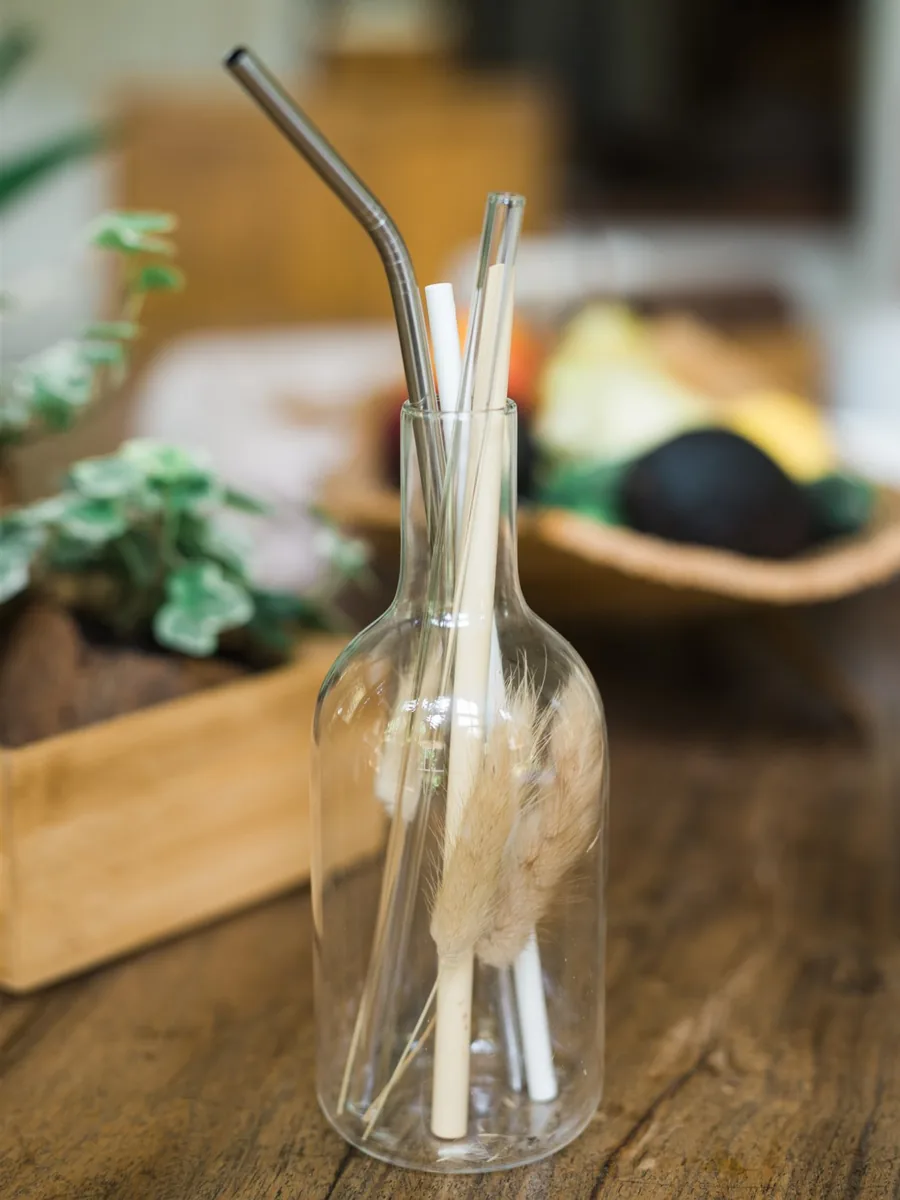
Glass, paper, metal, silicone and bamboo straws are all good replacements for a plastic one. What separates them is how long they last, how they wash and what they leave on the tongue.
- Metal straws are slightly ahead of the rest on function. They come in a range of colours, which does them no harm either.
- Glass straws are a fine solution, though they break easily.
- Bamboo straws are the best in terms of how they are made, provided the plant grows near you. If you are buying one, check that it is neither glued nor coated — those cannot go in the dishwasher.
- Silicone straws are gentler than metal or glass. They suit children, since there is no worrying about a knock to a tooth or a bite on something hard.
- Paper straws have a flavour of their own and are the last choice.
Why is a plastic straw so bad?
It is not biodegradable, which means bacteria and insects cannot break it down once it reaches its final destination — landfill. Degradation takes a very long time, and along the way it releases compounds such as bisphenol A (BPA), linked to both pollution and health problems.
Most straws are category five plastic, which is rarely recyclable. Even where it is, automated sorting plants usually separate it out and send it to landfill anyway.
They are small and light, so the wind carries them out of bins, lorries and landfill sites. From there they find their way into watercourses and endanger living things. Birds swallow them along with other small pieces of plastic, and marine mammals become entangled.
In water, straws gather with other plastic into vast floating masses. Those block sunlight from the algae and plankton below the surface, which can then no longer turn it into nutrients — and the entire marine food web depends on them.
This replacement is simple, and if everyone made it the difference would be enormous.
Second replacement — cloth napkins instead of paper towels
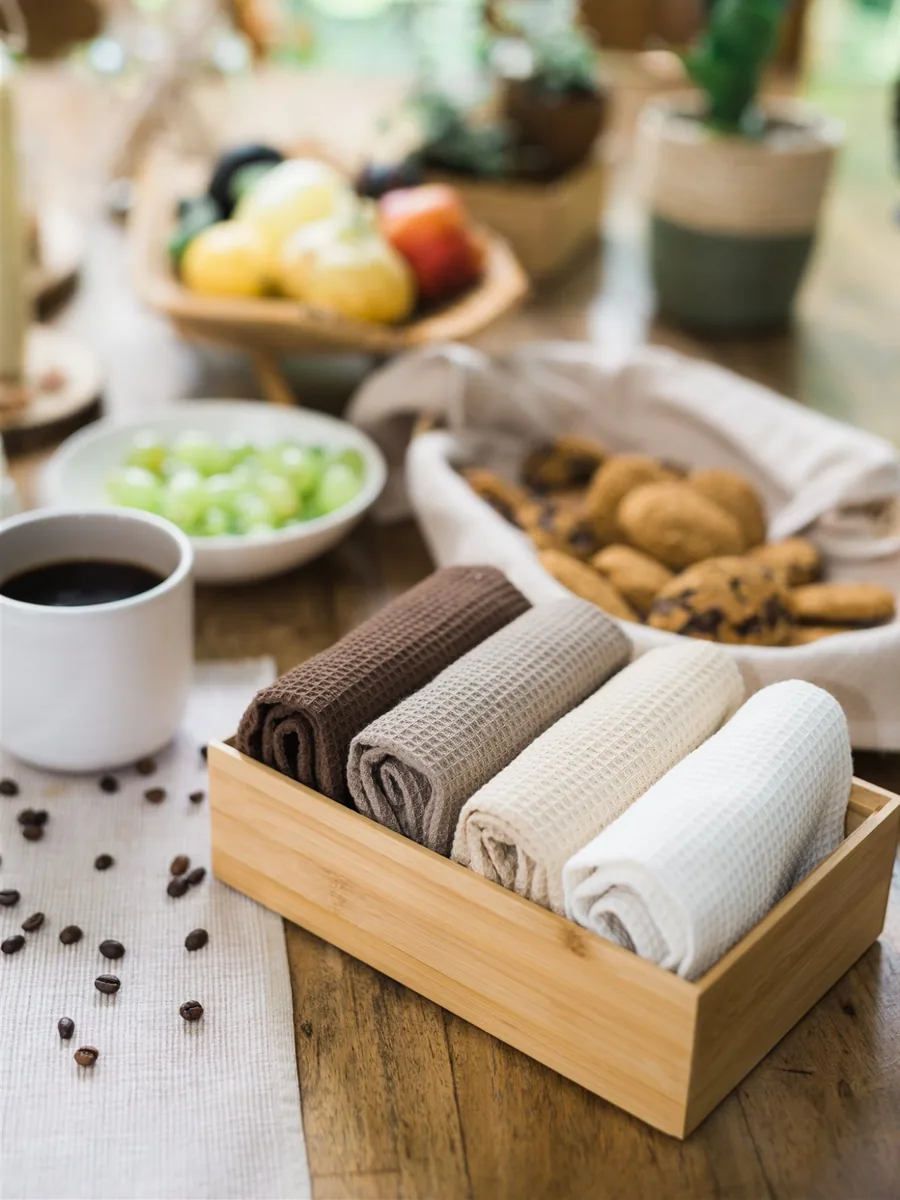
The first few days without paper towels take some getting used to. By the second or third day it feels so natural you wonder why you did not do it sooner.
The trick is to keep one cloth for the floor alone and for larger accidents, the sort pets have. Keep it under the sink and, when needed, soak it separately in hot water and vinegar before it goes in the machine.
Old t-shirts, towels or pillowcases cut up and hemmed into napkins are an excellent way to give them a second life. Choose the darker ones, so stains do not bother you.
Where do you keep cloth napkins?
Keep the clean, dry ones in a drawer, folded the KonMari way. You see them all at once and save a great deal of room. If the laundry basket is not close by, drop the used ones into a favourite basket or a small bin in the kitchen.
Hang the wet ones on a jute string above the sink or, better still, on a balcony or a window near the kitchen if you have one. I hang them there to dry first and then put them in the basket. I hang washed plastic packaging the same way, ready for recycling.
Do cloth napkins use more water?
They do not. You wash them with the rest of the laundry, and that extra water is negligible next to the amount used to manufacture paper towels.
What else do cloth napkins give you?
Paper towels usually come wrapped in plastic, so this replacement cuts your plastic too. The second gain is financial — it does not look like much at first, but added up across a year the difference shows.
Why avoid paper where you can?
The pulp and paper industry is a major driver of deforestation and carries part of the blame for the loss of species that live in forests. The life cycle of paper harms the environment from beginning to end: it starts with a tree coming down and ends in burning, which releases carbon dioxide. Water goes into it as well — ten litres for a single sheet of A4.
At the same time, wood and paper are our most abundant natural resources, the ones that make life easier and homes warmer. They can be recycled, and for every tree cut down another can be planted. We become part of the change we are after by using them when we truly need them, rather than the way we spend them now.
Third replacement — a towel instead of a plastic dish rack
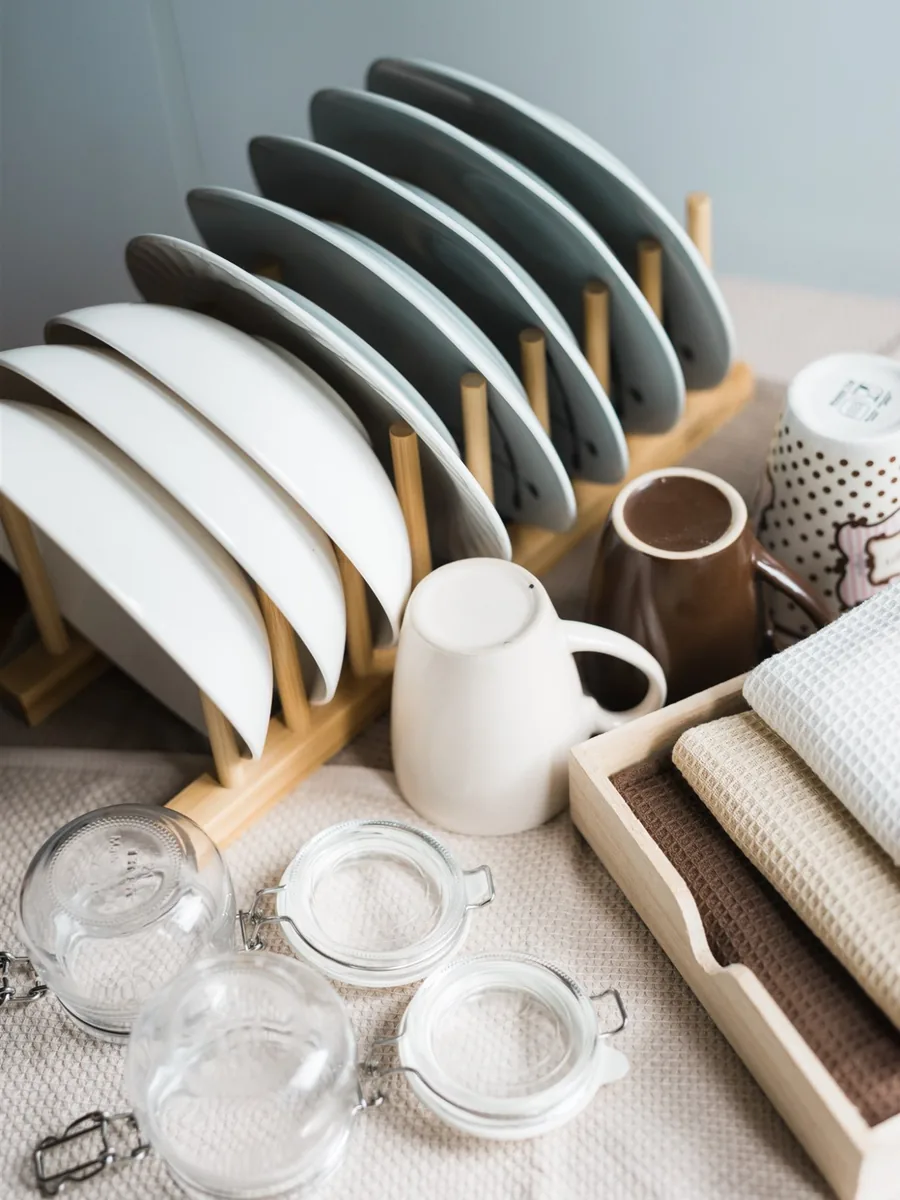
Another use for the kitchen towel: a drying pad for dishes.
Dish racks, which tend to be plastic, collect water and are difficult to clean. They also occupy the counter permanently. With a towel you can remove all of that and free up the counter.
Once the dishes are dry, I hang the towel out and then put it in the laundry basket.
If you worry about a stack of plates falling, use a metal or bamboo plate holder — it takes up little room and stows quickly. For cutlery, stand it in a glass or a cup you can easily wash afterwards.
Fourth replacement — kitchen sponges
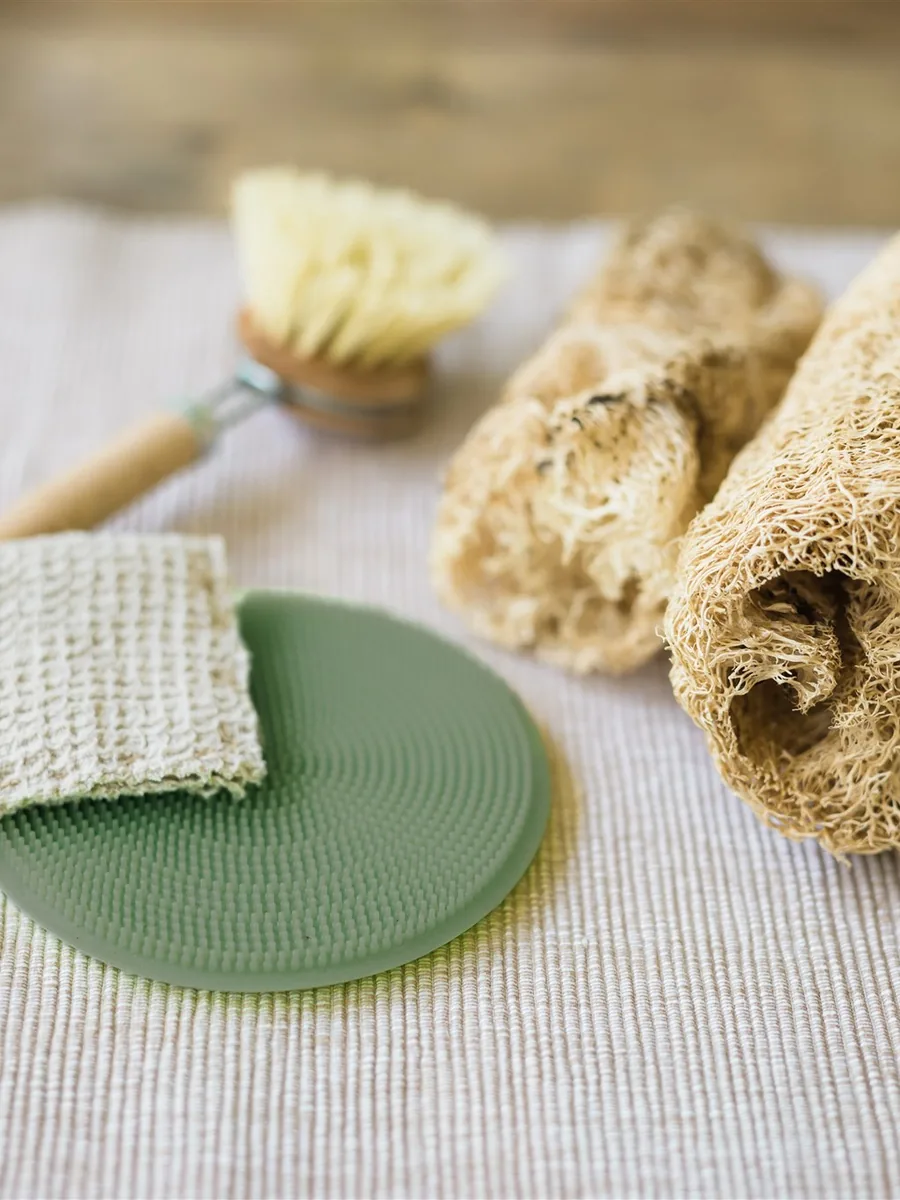
Replace the ordinary kitchen sponge with one of these: a loofah, a silicone scrubber, a dishwashing brush or a cloth sponge.
None of them is a perfect match for every job, but each is better than the one it replaces — and each lasts longer.
- A loofah is a plant of the cucumber family you can grow at home. It scrubs well without being as harsh as steel wool. Once it is worn out, it simply composts.
- A silicone scrubber harbours fewer bacteria than an ordinary sponge, cleans easily, is dishwasher safe and lasts a long time. Its main drawback is that it holds soap and foam less well, so you may get through a little more detergent.
- A dishwashing brush has a wooden handle and plant fibres for bristles. It lasts a long time, and only the fibre head needs replacing, which composts.
- A cloth sponge comes closest to the zero waste idea, because it gives an old t-shirt or kitchen cloth a second life. The ends are easy to sew together, and with detergent it foams. Not quite the equal of the original, but enough to make the change easier.
Fifth replacement — your own coffee mug and water bottle
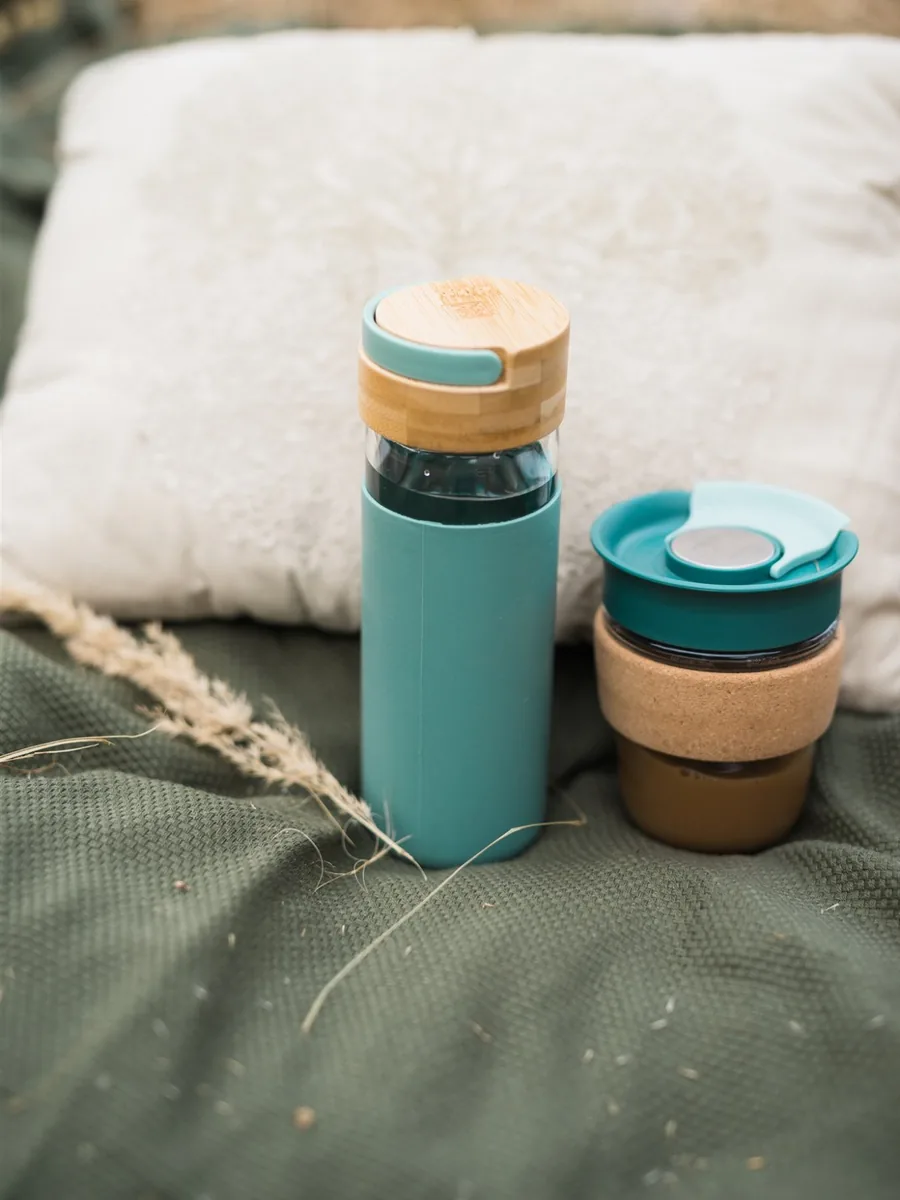
Carrying your own mug and bottle does more than help the environment. The drink holds its temperature longer and tastes better, because the cup does not leach harmful chemicals such as bisphenol A (BPA). You also save money, and the thing itself lasts for years.
Choose a mug and bottle made of stainless steel or glass, so they last. There are beautiful ones on the market now; take your time and pick a design that genuinely sparks joy in you.
Sixth replacement — your own cutlery and food containers
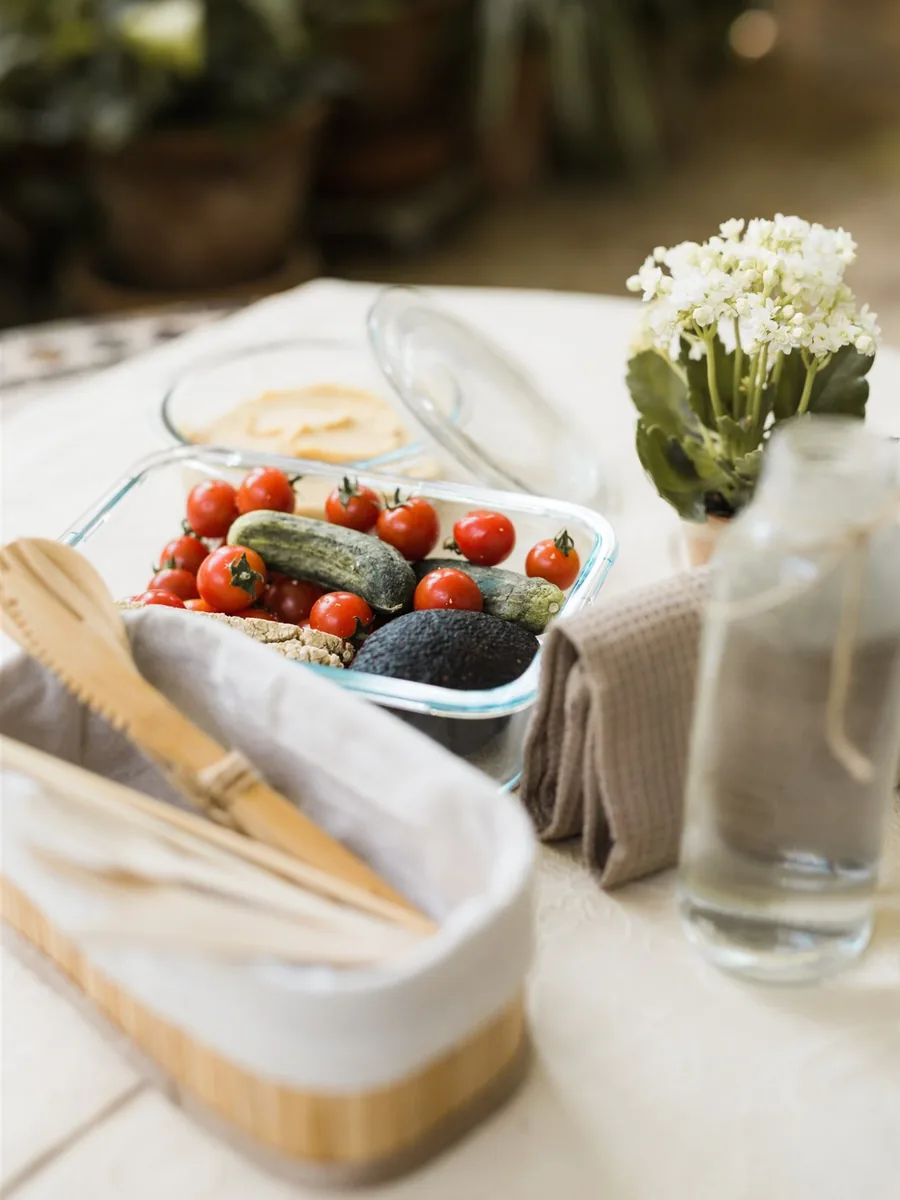
Much like the mug and the bottle: carry your own cutlery and containers when you take food with you, or when you buy something a shop would otherwise pack into a plastic tub.
Glass containers with bamboo or glass lids are sturdier and better looking, even if they are heavier to carry. Plastic ones stain from sauces and scratch quickly. If you do choose plastic, check that it is free of bisphenol A (BPA), which affects the endocrine system.
As for cutlery, I set aside a particular set and keep it in a small cloth that doubles as a napkin at the table. If the weight bothers you, use wooden or bamboo cutlery for that purpose alone.
Where to go next
Once the replacements are in place, what you wash and clean with comes next. I write about that in the text on bio-enzyme and natural cleaning products. Every other text sits on the zero waste page.
If the kitchen is full of dishes and utensils you never use, the replacements come more easily after a declutter. The kitchen belongs to komono in the KonMari method, and it is left deliberately for last.
Not sure which replacement to start with?
I offer zero waste consultations in Zagreb and the surrounding area. Book a free 20 minute call and we will look at your kitchen together.