Natural homemade rosemary soap
A green soap with spirulina and rosemary leaves —
the recipe step by step

The green in this soap does not come out of a bottle. It comes from spirulina, and the dark specks in it are rosemary leaves.
The olive oil here is extra virgin, so cold-pressed. It is the one occasion I use it, and the reason is colour: cold-pressed oil gives a darker soap.
The procedure is the same as for the castile soap, with one step more. The basics are in the guide.
The recipe
Ingredients:
- Olive oil (extra virgin) — 670 g / 23.6 oz
- Sunflower oil — 180 g / 6.35 oz
- Castor oil — 50 g / 1.76 oz
- Lye, sodium hydroxide (NaOH) — 115 g / 4.05 oz
- Distilled water — 207 g / 7.30 oz
- Lye discount — five per cent
- Spirulina — 2 teaspoons, about 5 g
- Fresh rosemary leaves — 2 to 4 teaspoons
- Rosemary essential oil — up to 30 g / 1.06 oz
The last three amounts come from the rules for colours and herbs: a teaspoon of powdered colourant and one to two teaspoons of fresh herbs per 454 g of oil, and essential oil at no more than three per cent of the total lye and oil. Here that is 900 g of oil and 115 g of lye, so two teaspoons of spirulina, two to four teaspoons of leaves, and 30 g of essential oil at most.
For a lighter green, use less spirulina. Natural colourant must never exceed five per cent of the soap.
Weigh the ingredients
Weigh the distilled water
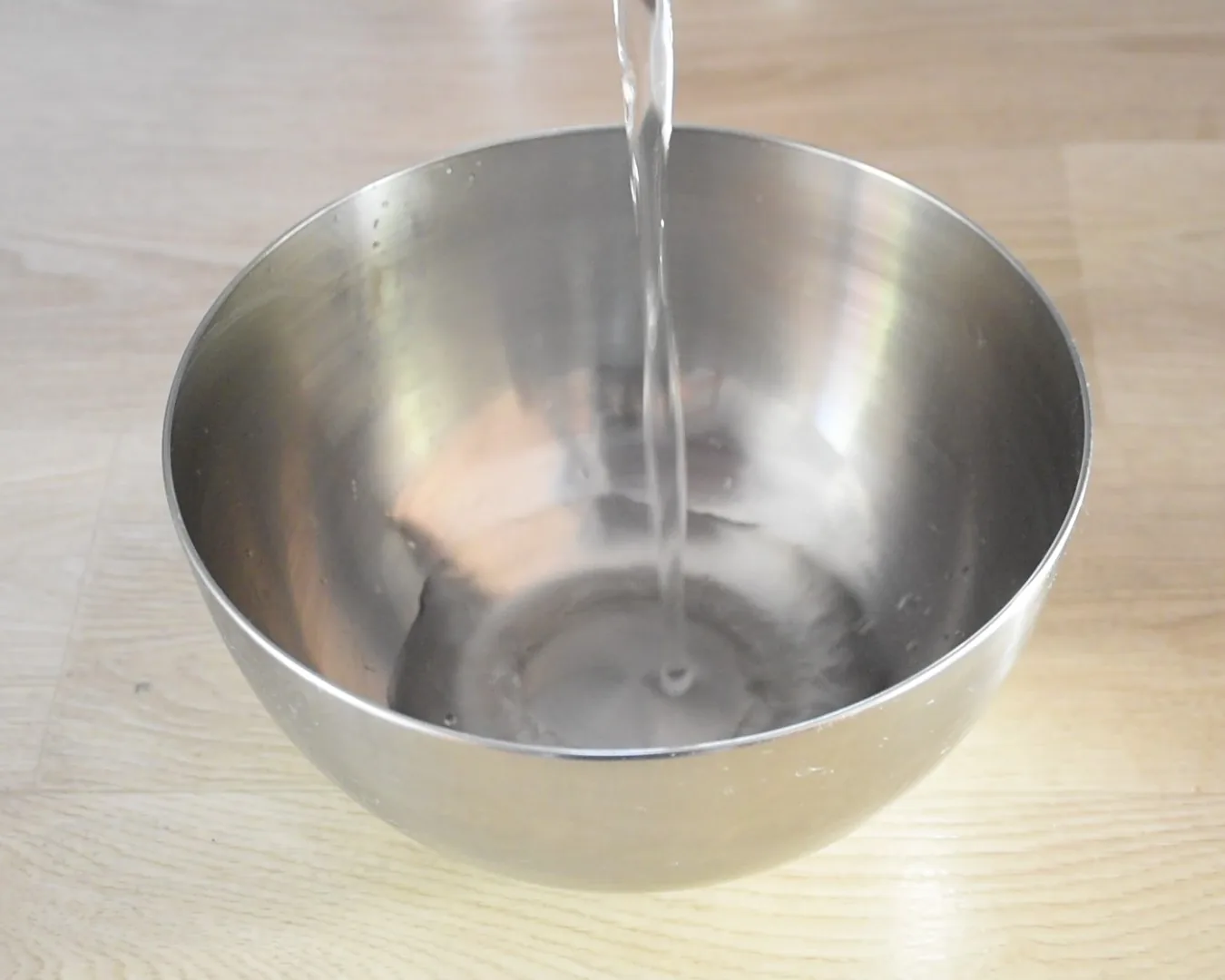
Weigh 207 g / 7.30 oz of distilled water into a bowl.
Get the spirulina and the rosemary ready now, while there is no rush — later, once the trace appears, everything moves quickly.
Weigh the lye
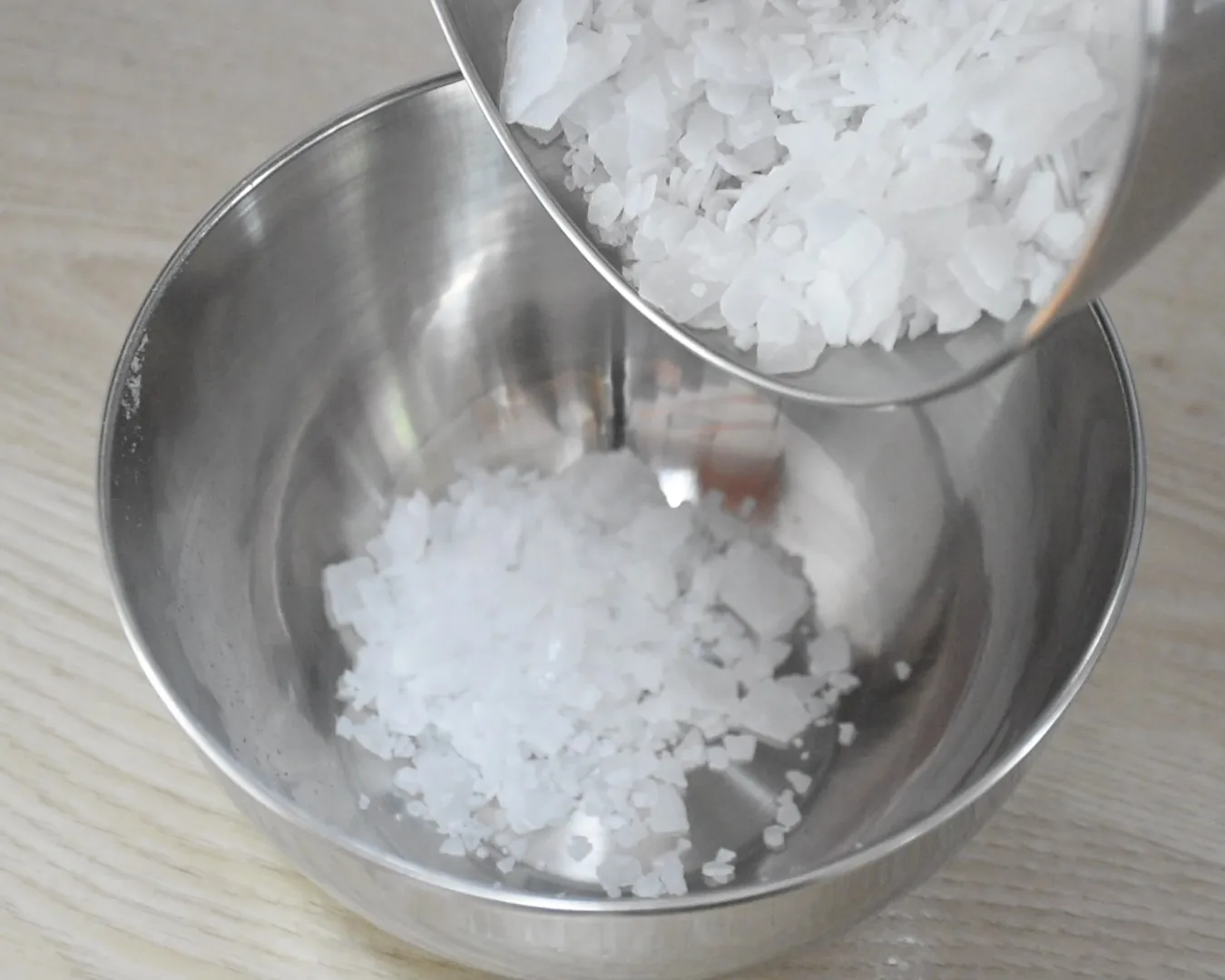
Weigh 115 g / 4.05 oz of sodium hydroxide into a separate bowl.
Goggles, mask and gloves go on before you open the lye.
Weigh the oils
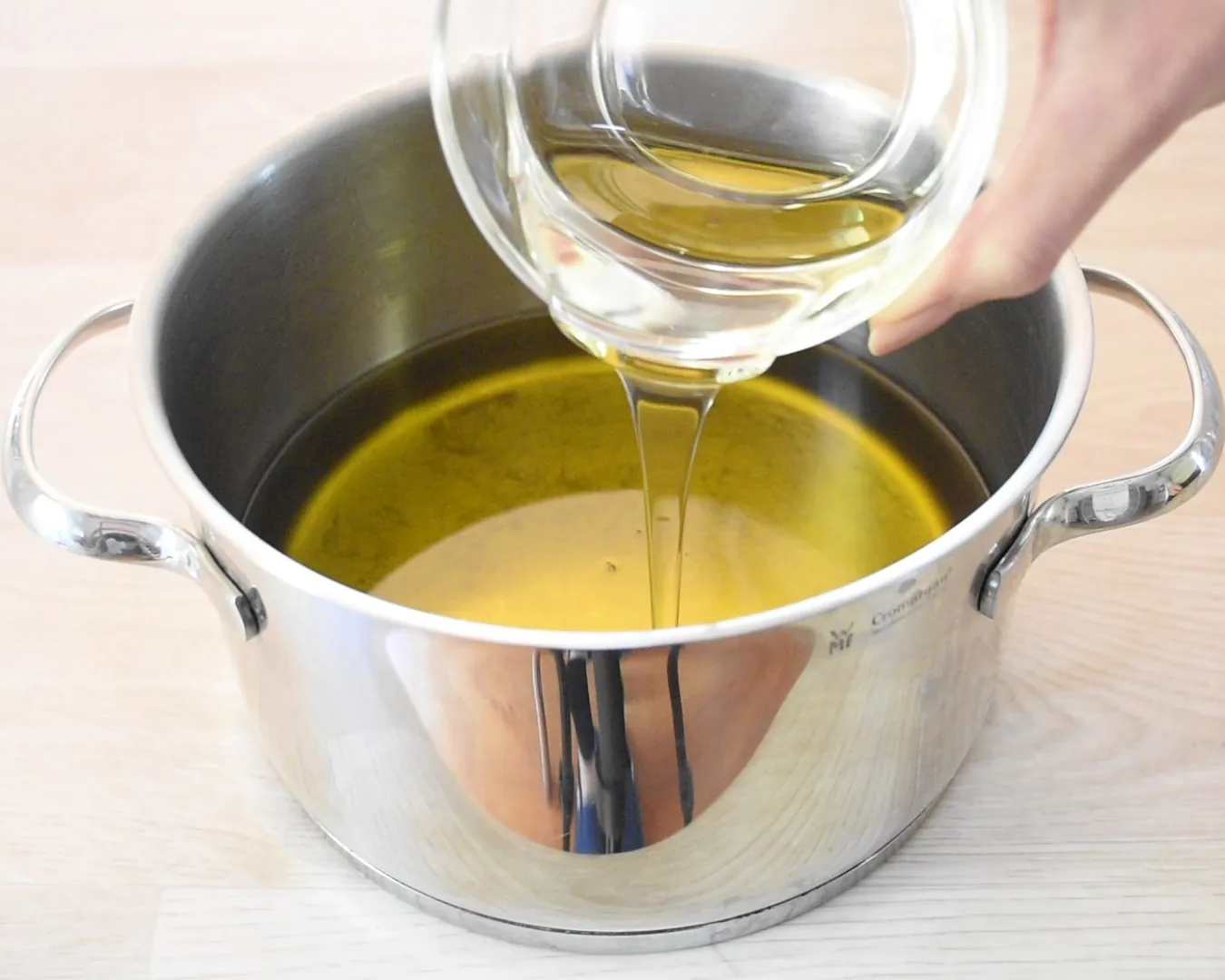
Weigh 670 g of extra virgin olive oil, 180 g of sunflower oil and 50 g of castor oil into the pot.
Zero the scales before each oil.
Make the soap
Pour the lye into the water
Slowly pour the lye into the water. Never the other way around, as it can provoke a violent reaction. Work near an open window and keep your face away from the pot and the fumes.
Stir a few times with a plastic or stainless steel spoon until the lye dissolves in the water.
Match the temperatures
Let the lye solution cool to between 30 and 50 °C / 86 and 122 °F, and heat the oils to roughly the same temperature. A difference of up to eight degrees is fine.
For a deeper green, work closer to the upper end, 47 to 50 °C. For a lighter one stay at 35 to 37 °C.
Combine and blend to a trace
Pour the hot lye solution into the oils. Blend without moving the blender, then switch it off and stir by hand. Repeat until you reach the trace — about five minutes.
Add the spirulina and rosemary
Stir the spirulina, the rosemary leaves and the rosemary essential oil into the trace. Keep stirring until the colour runs evenly through the whole batch.
Pour the soap into the moulds
Pour the soap into the silicone moulds and smooth the tops with a spatula.
Cover the soap and leave it
From here there are two options:
- Cover the soap with cardboard and a towel and leave it for at least twenty four hours, though forty eight is better.
- Put the uncovered mould into a previously heated, now switched off oven at 50 °C / 122 °F and leave it for twenty four hours.
Cut the soap into bars
Take the soap out of the moulds and cut it with a knife into slices 2 cm / 1 inch wide.
Let the soap cure
Set the bars on a rack, cover them with a cloth, and leave them somewhere cold and dark for at least a month. For the best result, give them three months.
The dark place matters here for one more reason besides the soap itself: the green from spirulina fades in the light.
Where to go next
The other naturally coloured soap is the coffee and cocoa soap, where ground coffee goes into the distilled water instead of the water going in plain. Without colour or herbs there is the castile soap, and a different ending belongs to the liquid soap.
Every text about living with less waste sits on the zero waste page.
Not sure where to start with the changes?
I offer zero waste consultations in Zagreb and the surrounding area. Book a free 20 minute call and we will look at where to begin.