Stand it upright
Fold the clothes so they can stand upright, as in a drawer. More fits in, and you see everything at once when you open the case.

Decluttering, KonMari folding and storage —
five steps to a wardrobe where you see everything at once
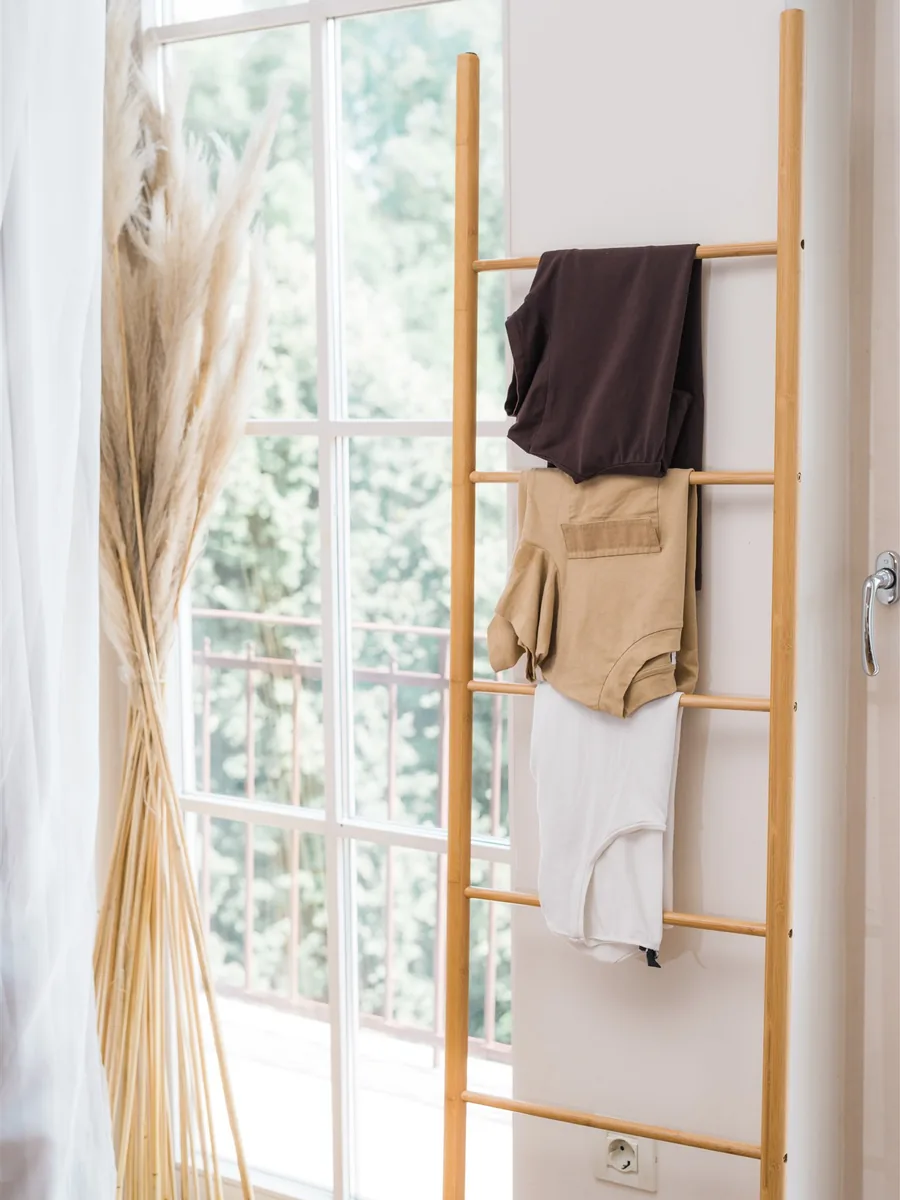
Clothing is the first category in the KonMari® method. It holds a folding technique of its own and the largest number of questions about storing and organizing — probably because it is the category we live with every single day.
Below is the whole process in five steps, and after it the questions clients ask me almost every time. If you are looking for something specific, skip to it through the table of contents.
This guide is part of the complete guide to the KonMari® method, where the six basic rules and the order of all five categories are set out.

Choose a place where you can gather all of your clothing in one spot. A bed in the bedroom or a table in the dining room works beautifully.
The clothes that are leaving go into four boxes: sell, donate, repair and recycle.
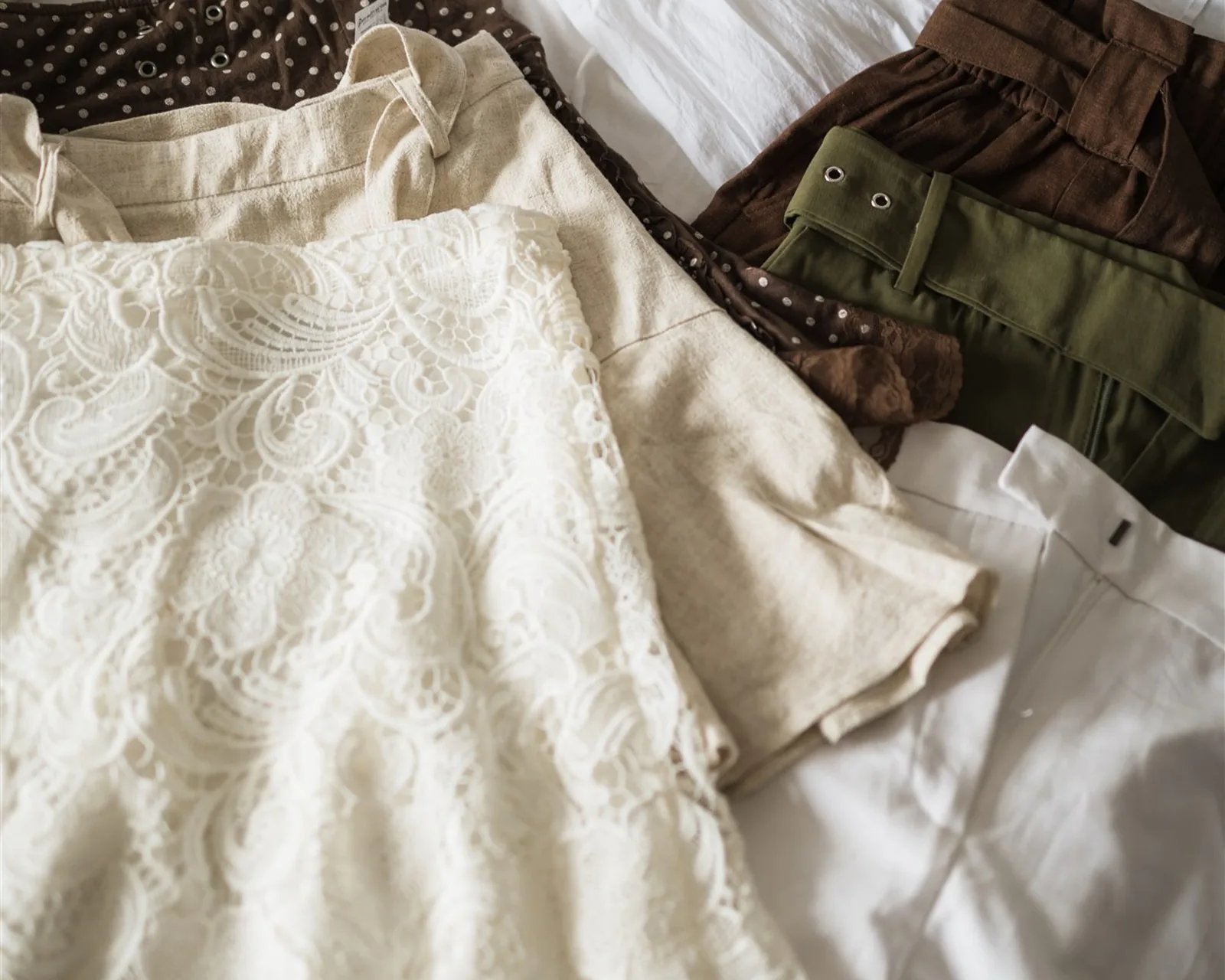
Go through every place where you keep clothing — wardrobes, baskets, the washer and the dryer, the pile waiting to be ironed, and clothes put away for another season.
As the pile grows, group items into subcategories: socks on one side, t-shirts on another, dresses on a third. If there is clearly too much clothing for one room, split the subcategories between rooms — dresses in the living room, underwear in the bathroom.
To be more objective, start with off-season clothes — it is harder to decide about something you wore recently. It is also simpler to begin with shirts and blouses, before moving on to trousers, skirts, socks and underwear.
Pick your three favourite pieces and keep them nearby as a benchmark. They stand for a ten out of ten, and in practice I would not go below a five or a six. Take each item in your hands and notice how it makes you feel. Does it spark joy? Did your heart skip a beat, did you smile — or did remorse and despair take over instead?
If a piece carries a deeper meaning for you, because of the person you got it from or the memories attached to it, treat it as a sentimental item and leave it for the last category.
If the choice is hard, these questions will guide you through the joy check:
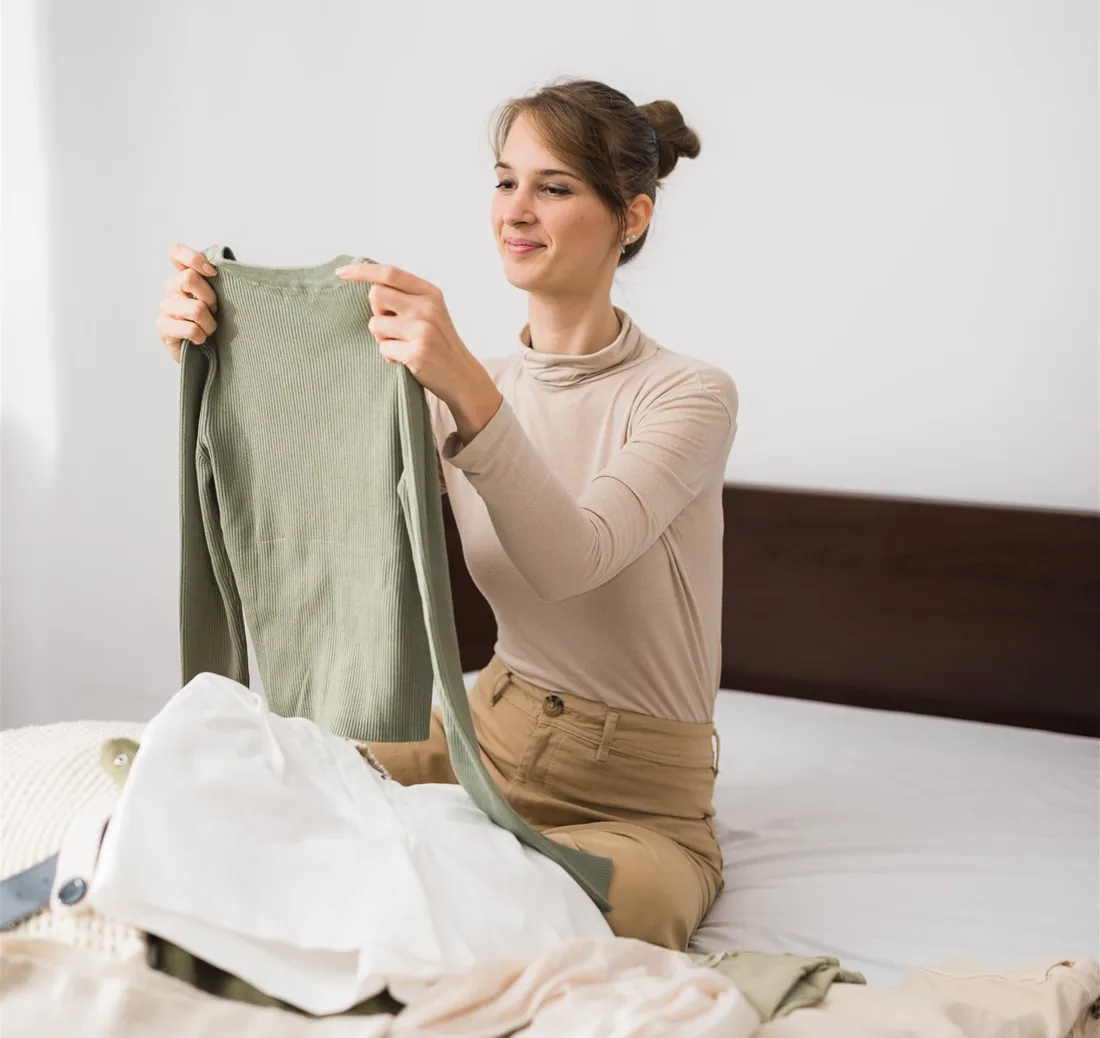
Make a separate pile labelled “need to try on”, and after the joy check hold your own fashion show in front of the mirror.
If you are still unsure, keep the item with confidence and place it at the front of your wardrobe, among your favourite pieces. Wear it as much as you can over the next two weeks. One of two things will happen: either it will fit in perfectly and become one of your best choices, or it will bother you enough that this time you will not hesitate to donate it.
If an item does not spark joy but was expensive, so you feel obliged to keep it — put it on and ask yourself whether you want to wear it out somewhere, without thinking about the cost. If there is no delight, donate or sell it without hesitating. You will make someone very happy, and you will learn a great deal about what you like to wear.
Items you love but are embarrassed to wear go into the decorative box. At the end of the KonMari festival, go through that box and find another use for them — on a wall, or on some other surface.
Thank the things you let go. This is the last and important part of the joy check: at some point every item brought you joy and fulfilled its purpose. They also help you work out what you like about similar items and what bothers you — texture, shape, colour. If you forget to thank each piece as it goes, hug the whole box and say thank you.
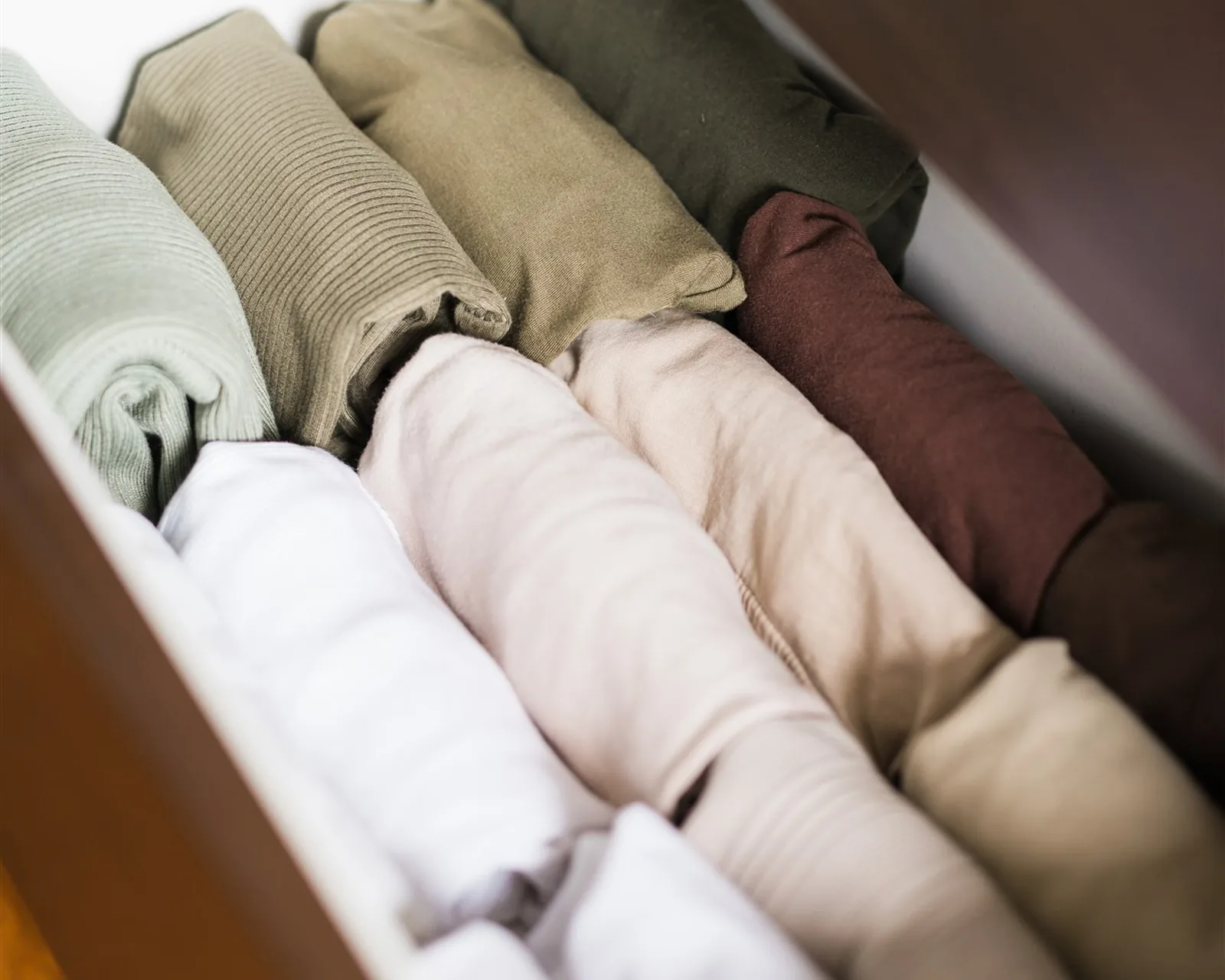
The goal is a small rectangle that stands upright on its own. Once it is in the drawer, every piece should be as visible as a book on a shelf.
Those are the basic steps. I show how to fold each particular kind of clothing in videos, sorted into playlists on my YouTube channel: women’s clothes, men’s clothes, children’s clothes, linens, hanging garments and travel clothes.
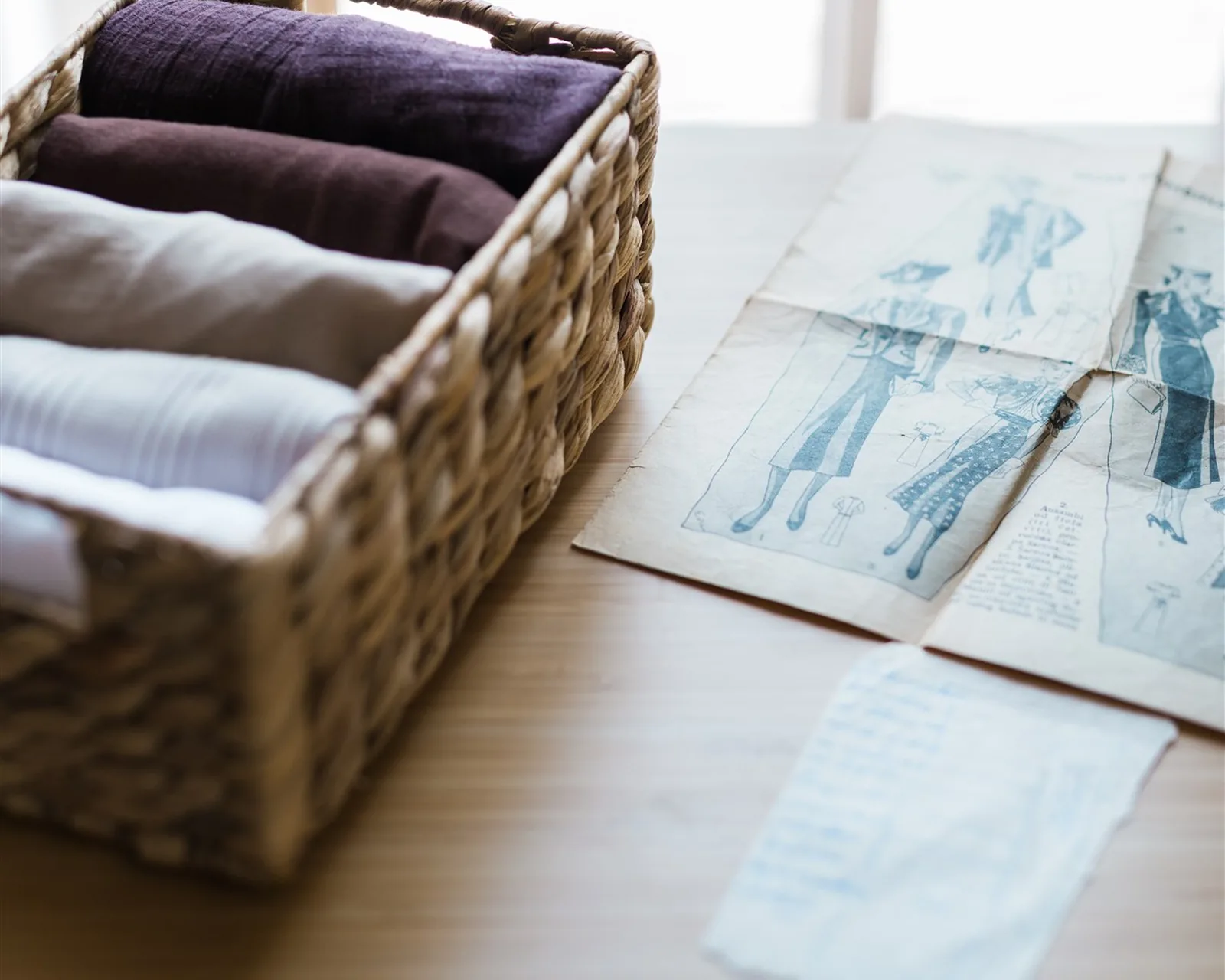
A free 20-minute call is the easiest first step. We go through your situation, with no obligation.
Folding is the best-known part of the KonMari process, and for good reason: compared with hanging, folding clothes like cassettes can create up to four times more storage space. But folding is not only about saving room. As your palms pass over the fabric you smooth it out and see whether there are stains or holes — and that touch does for a garment what taking someone’s hand does for a person.
The first time it does, especially when you have taken out absolutely every piece you own. But with practice, and once you have folded a single load of laundry, your speed returns to normal — because KonMari folding involves on average only one fold more than the one you are used to.
Not when it is done properly. Each time you fold a section, press firmly with your palm across the whole fabric. Creases are not really caused by folding anyway — they come from the weight of other garments stacked on top of one another.
No. Some materials will not stand upright after folding — then leave them flat, or see whether they would rather be hung. Coats, jackets and blouses in delicate materials are better hung. Tights and long socks can be rolled.
Folding is also an excellent meditation technique. Every time your thoughts wander, you bring your attention back to a physical sensation — here touch, where in meditation it is usually breath. The next time you do not feel like folding the laundry, remember that you will also be meditating for five to ten minutes.
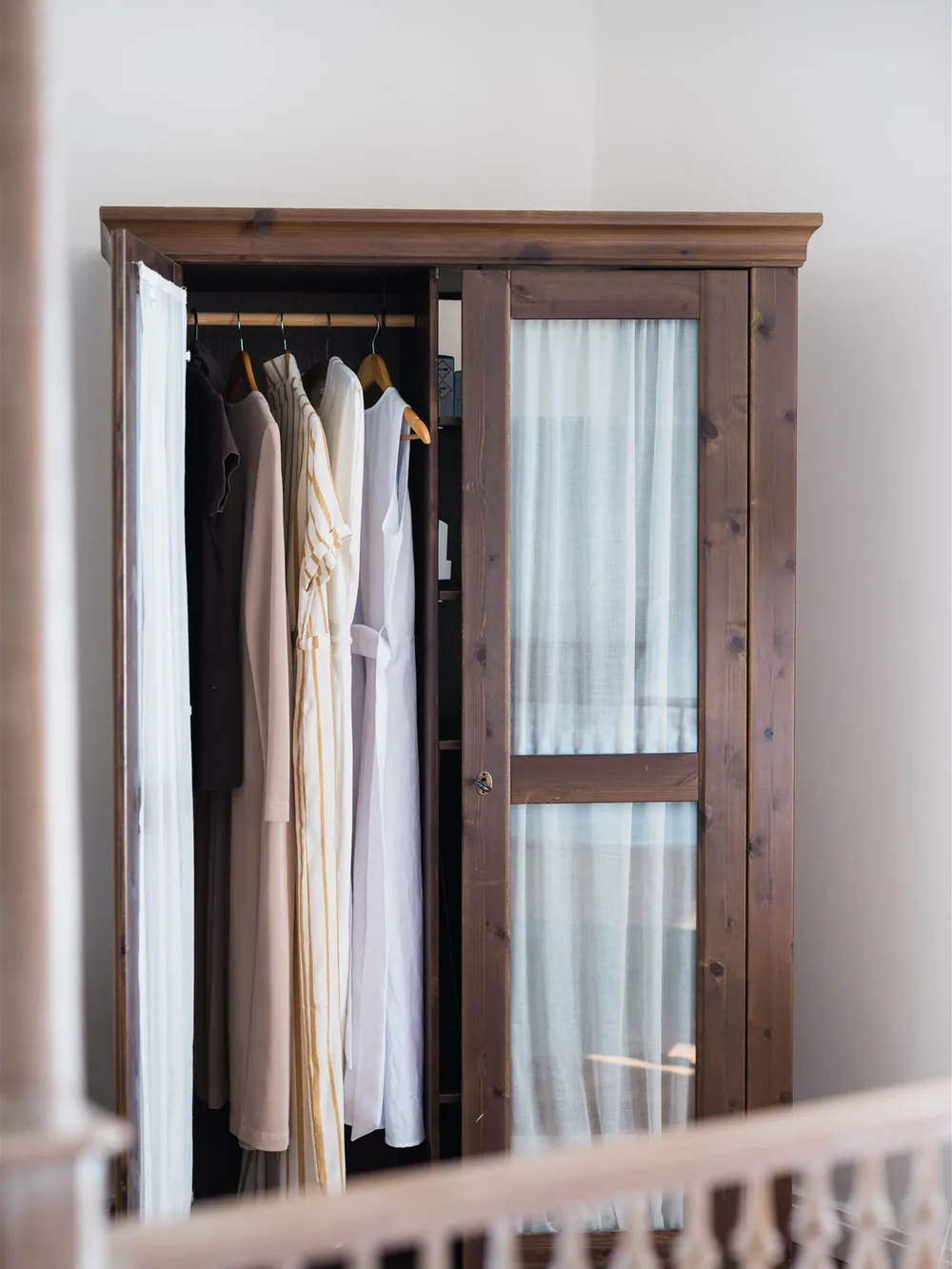
When you hang clothes in a closet, we follow two rules.
The rules occasionally collide. A short black light dress belongs at the far right because it is light and short, and at the far left because it is black. In cases like that, follow your intuition and one question: when you decide what to wear, do you decide by colour or by material?
How to organize socks and still have room for them is one of the most common questions. The usual way is to roll a pair into a ball, and the better way is exactly the opposite — fold them once or twice. Rolled into a ball, the elastic stretches just as it does when you wear them, so the material never gets a chance to rest. On top of that, your drawer will have far more room. Put them in compact, open boxes so they can stand upright and take up the least space.
You can see how to fold socks the KonMari way in this video.
The second most common thing with socks is that we tolerate holes. Good socks are care for the feet that carry us all day — the same goes for slippers and shoes.
Lay the narrow end over the wide end, up to the label, so that you get a rectangle. Fold the narrow part towards the wide part, up to the label, leaving a gap at the edge. Fold six or seven times, or simply roll it up. Store them in drawers or beautiful boxes, from darker to lighter, so they are clearly visible at a glance.
You can also hang them — on a tie hanger or an ordinary one, or fit a tie rail on the inside of the closet door.
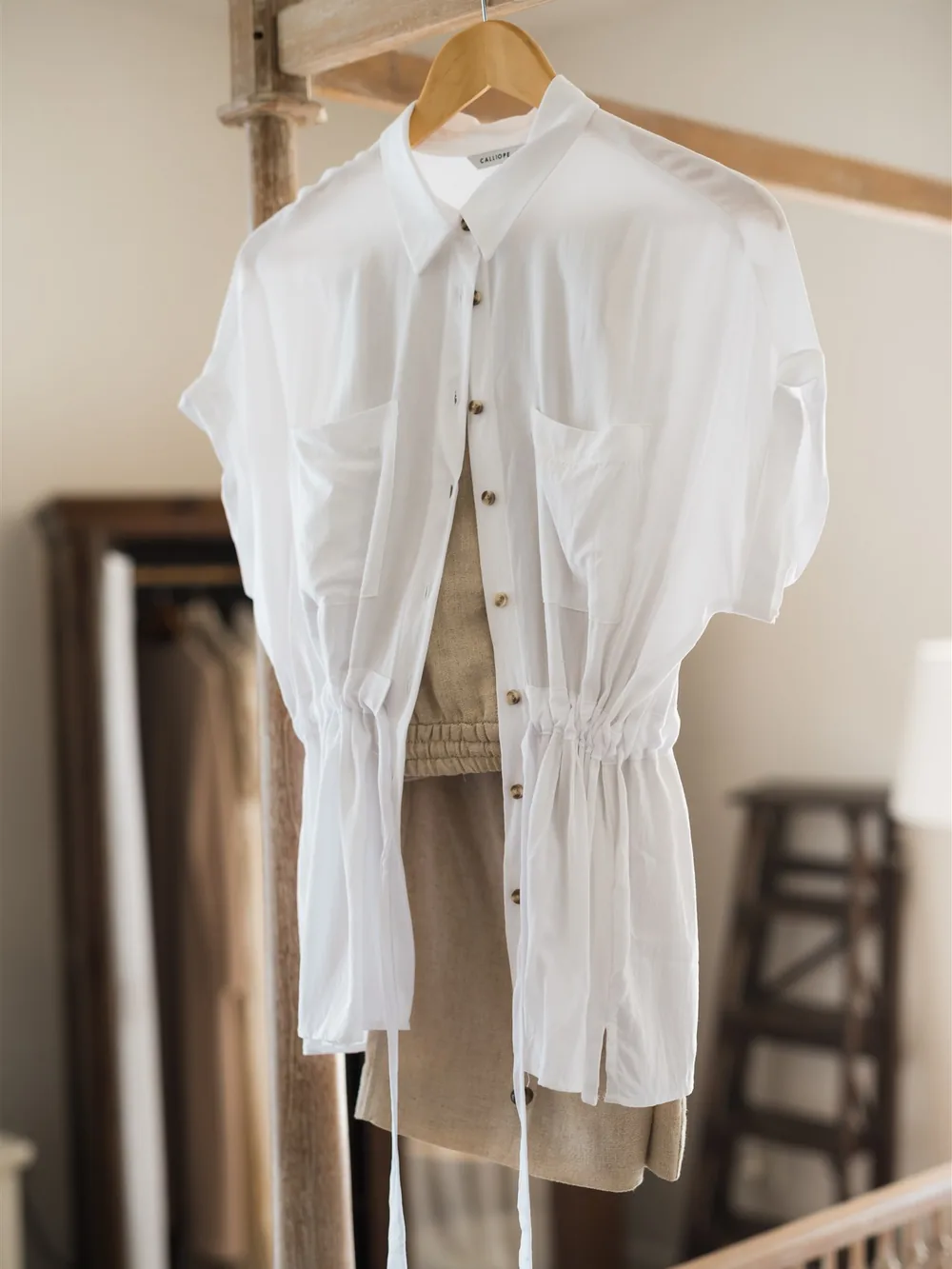
One of the loveliest things the KonMari method taught me is that how I feel at home matters. Avoid wearing anything that would embarrass you if the doorbell rang unexpectedly.
Once you start caring about how you look and how you feel when nobody is watching, you begin to develop a better sense of yourself.
Children older than three can begin deciding for themselves what sparks joy, and it is a wonderful chance for them to express who they are. If they do not want to let anything go, learning to fold often encourages them to give — because once things are folded they can see how much tidier the space becomes. I show how to fold children’s clothes in this playlist.
Fold the clothes so they can stand upright, as in a drawer. More fits in, and you see everything at once when you open the case.
Fold suits and lay them flat on top, over the pieces standing upright.
Pack bras on top and do not flatten them — they will keep their shape until you arrive.
Pack underwear, socks and t-shirts into separate travel pouches. Rummaging through the case stops.
Move lotions and toiletries into smaller bottles and cut the volume.
When you get back, set a timer for 30 minutes: everything goes back in its place or into the wash, and the outside of the case and its wheels get wiped down.
I show packing a suitcase in videos, and here is the playlist for folding the clothes that normally hang — the ones that have to be folded for travel. All the playlists by type of clothing are on my YouTube channel.
That is the hardest part and nobody finds it easy. Book a free 20-minute call and we will look together at where to begin.