
Marie Kondo and the KonMari® method — the complete guide for home organization
Six rules, five categories and four steps — the whole method in one place
Here you can find a guide on how to organize your home with the KonMari® method. It is divided into the sections you see in the table of contents below, so feel free to skip to the part you need. If organizing and the KonMari® method are new to you, I recommend reading it from beginning to end.
I write it as the first certified and only Master KonMari® Consultant in Croatia. I have been organizing homes and offices in Zagreb and the surrounding area by the Marie Kondo method since 2020, and everything here has been through real homes — with people who had the same questions you probably have.
About the KonMari® method
What is the KonMari® method?
The KonMari® method is a particular way of decluttering and organizing a home and a workspace, in which you decide what to keep by one criterion — whether the item sparks joy. The purpose is to be surrounded only by things that bring you joy, while the number of things does not matter. The method was created by the well-known Japanese home organizing consultant Marie Kondo.
What is a KonMari festival?
The method asks us to tidy everything once and all at once, rather than gradually — which is where the name KonMari tidying festival comes from.
What does the word KonMari mean?
KonMari is a combination of Marie Kondo’s name: Kon (the start of her surname) and Mari (the start of her first name).
What does it mean to fold clothes the KonMari way?
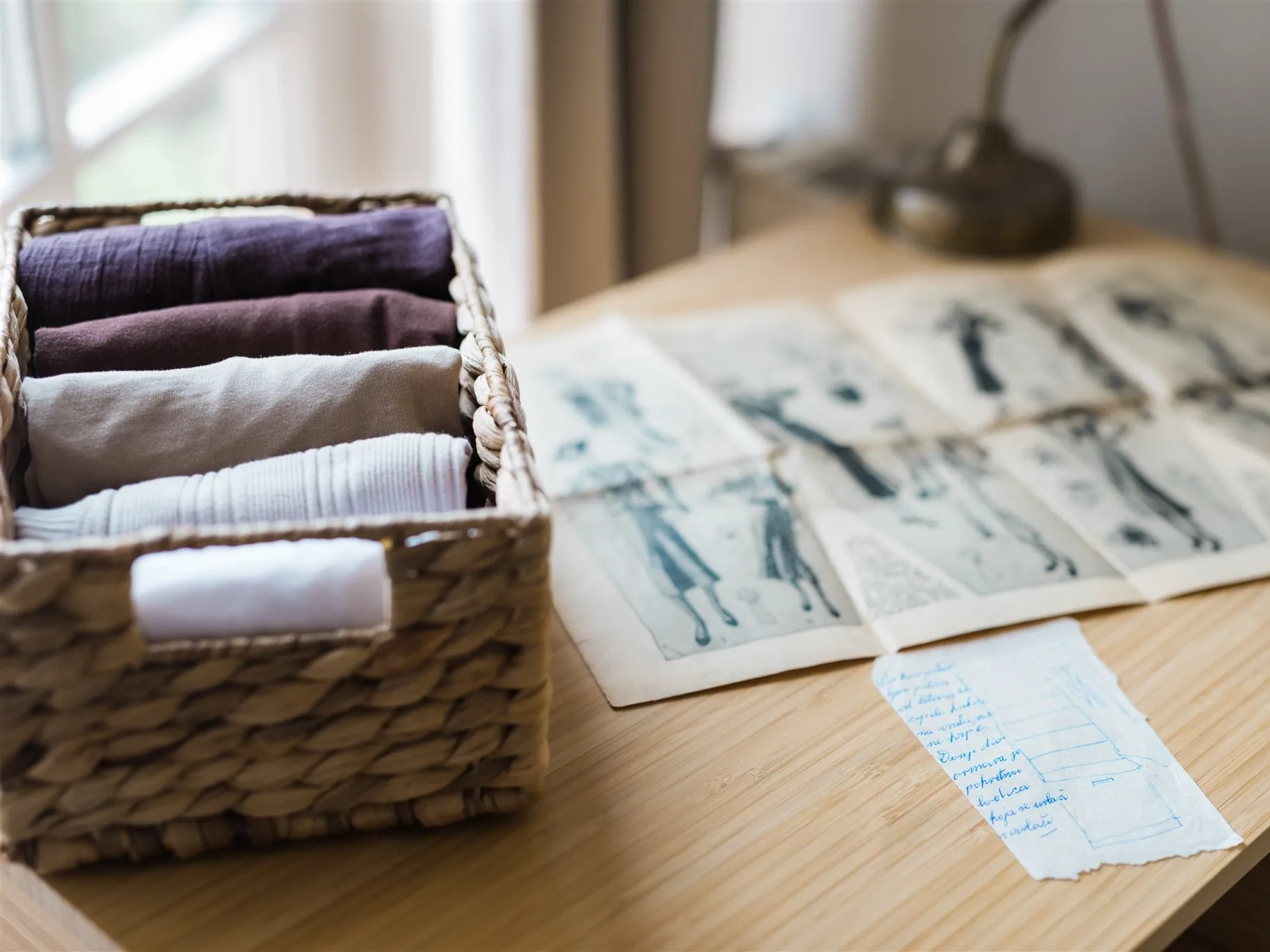
Folding the KonMari way means turning each piece of clothing into a small rectangle that stands upright on its own. You then line the folded pieces up in the drawer like files in a cabinet — one next to the other, so you see everything at once, without digging through a pile. You can watch the videos where I show how to fold almost every piece of clothing on my YouTube channel.
What does it mean that an item sparks joy?
It means that when you see the item and pick it up, you feel a rush of joy. The same thrill you feel when you pick up your favourite coffee cup, or put on the dress you feel best in.
How many books did Marie Kondo write?
Four books, one manga and one picture book for children, alongside two Netflix series. The books are The Life-Changing Magic of Tidying Up, Spark Joy, Joy at Work and Kurashi at Home. The manga is The Life-Changing Manga of Tidying Up, and the picture book Kiki and Jax.
What makes the KonMari® method different from other methods
Although it is aimed at decluttering and organizing a home and a workspace, its principles inevitably spill over into every other part of life where we make decisions, so we begin to live more consciously. For the method to work, you need the wish to change and the willingness to change habits — as with anything else.
Objects serve as a mirror. Through them we discover who we are, what we love and how we want to live, and as a result we begin to enjoy the present moment and small things more, instead of regretting the past or waiting for some large future.
The KonMari® approach is unique in two ways. The first is mental and physical, as we will see in the six basic rules. The second is emotional, or more precisely — personal growth.
The goal is that after the KonMari festival you are able to keep your home in order yourself. That change is possible precisely because we tidy everything at once and build large piles: only then can you see how you actually live. Once the first visible results appear, maintaining stops being hard, because every thing has its place.
We approach a home as a project that will take time. Just as it was built or renovated from the outside and from the inside, the same holds for the things within it. This is the third and final step to a finished home. As in the first two, be ready for dust, for moving things around and for a few hard and exhausting moments — but at the end the space you live in is complete, and it gives you comfort, calm and support for the life you wanted when you started.
Unlike the first two steps, which are more technical, the third is the hardest because of that emotional side. A messy room means a messy mind: when the room is clean and uncluttered, you have no choice but to look at your inner state as well.
Tidying brings you to an organized home or office, but along the way you also discover some truths about yourself — about how you make decisions, and how much gratitude and respect you hold, not only towards objects but towards all the small things that shape your life. And the answer to whether you are living it the way you want, or the way others and society expect.
Would you rather go through the method with someone beside you?
A free 20-minute call is the easiest first step. We go through your situation, with no obligation.
Six basic rules of tidying
Commit yourself to tidying up
Like every new decision that asks us to change our habits, thorough decluttering asks for time, and for physical, mental and emotional effort. In the end it repays that many times over.
Imagine your ideal lifestyle
The key question is how you want your home to look and how you want to live in that space. It is not only your main goal but also your guiding star at every moment during tidying when you get stuck because some item pulls you into the past or too far into the future. The question is one: does this item belong to the life you want, and does it support you as you are today?
To finish this step, imagine explaining to a stranger or an interior designer how your home will look after the KonMari festival. You describe it room by room and detail by detail, but also why you are doing it and how the finished version of the space will look.

Finish discarding first
We can organize and store only once we see what stays and how much of it stays. Until the last category is finished, every place we have put something is temporary.
Tidy by category, not by location
When we work on clothes, we do not organize a closet (a location). We bring every piece of clothing you own to one spot, or more precisely into one pile. From underwear to winter coats.
The pile shows the true state of things. Only then do you see how much you own, judge each item in its proper context and notice duplicates — several copies of the same thing.
Follow a specific order of categories
The order is designed to build your ability to recognize what sparks joy step by step, from easier to harder. There are exceptions: if someone is deeply invested in a category, fashion for instance, clothes will not come first, because the attachment is too strong.
In a business space the categories are the same, except the first one — clothes. In digital organization they are documents, email and phone applications.
Ask yourself whether the item sparks joy
Unlike conventional methods, which look at what to get rid of, this one looks at what to keep. Hold the item firmly in both hands and pay attention to how your body responds. When joy sparks, you feel a rush. The detailed process is below, in the third step.
Some items do not spark joy the moment you touch them — a hammer, for instance. But once you remember what purpose it serves and how it makes your life easier, the spark returns. It is always worth thanking an item before you donate it: at some point it sparked joy in you, and now it has helped you tell what you love from what you do not.
The five main categories
The order of the categories, and why it is what it is, is described in the fifth rule. Below is each category on its own, with what makes it particular and a link to the detailed guide.

Clothes
Best known for the KonMari way of folding. Before folding, though, we go through every piece of clothing you own and make sure for each one that you enjoy wearing it. Shoes, bags, jewellery, hats, scarves and glasses belong here too. Because of its size I split it into several separate guides:

Books
Books usually bring two questions: should we keep them if most of the time we do not read them, and how many should we have?
The exact steps, which for books can and should differ from the other categories, are in the guide Books — how to declutter and organize books.
Papers
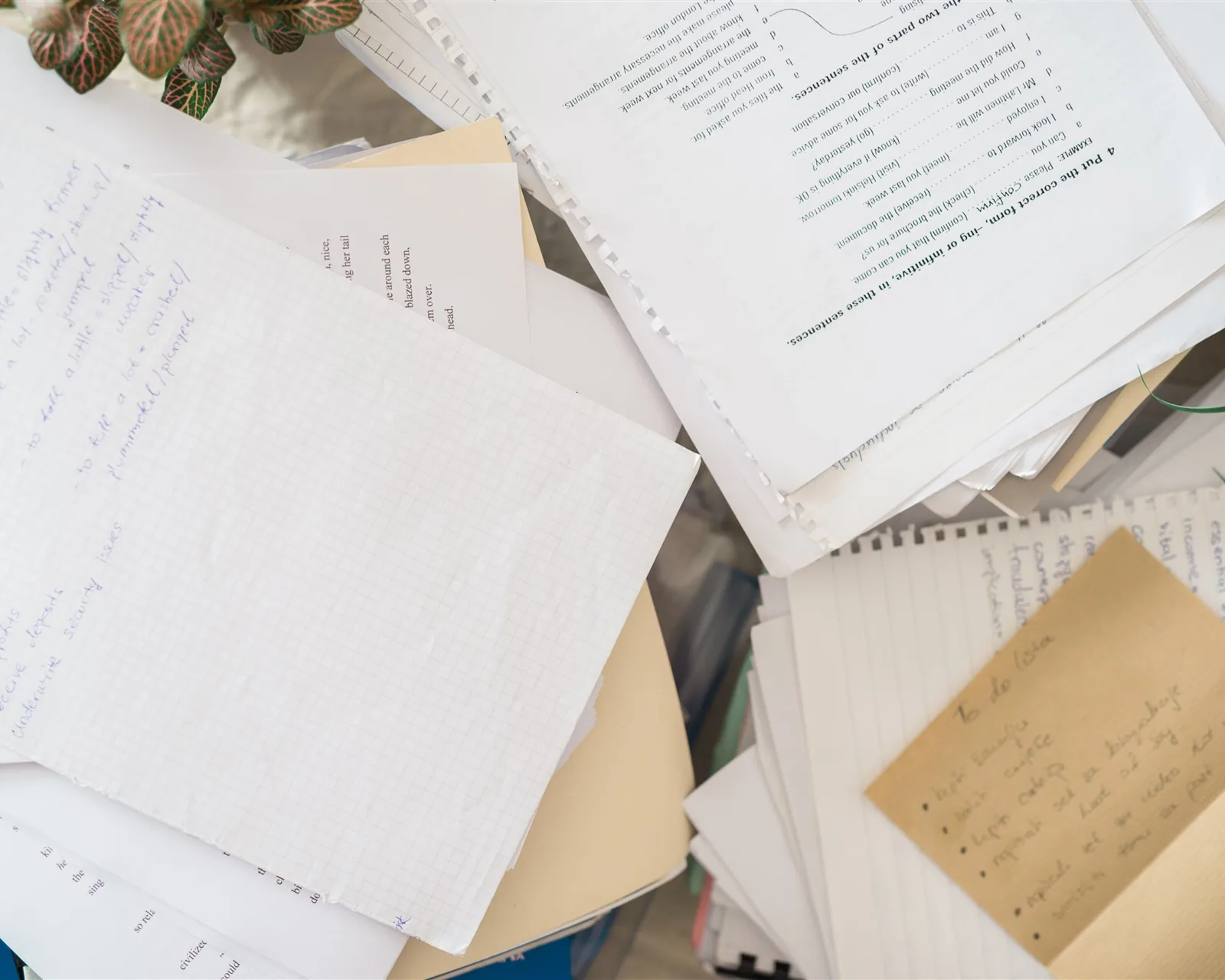
The category where an orderly system is needed most. Papers come into a home and an office quickly and easily, they create clutter and they cost you time when you need a particular document. The main rule is to behave as though you had to discard every document — after that, only the truly important ones remain.
The detailed process is in the guide Papers — how to declutter and organize documents.
Komono — miscellaneous items
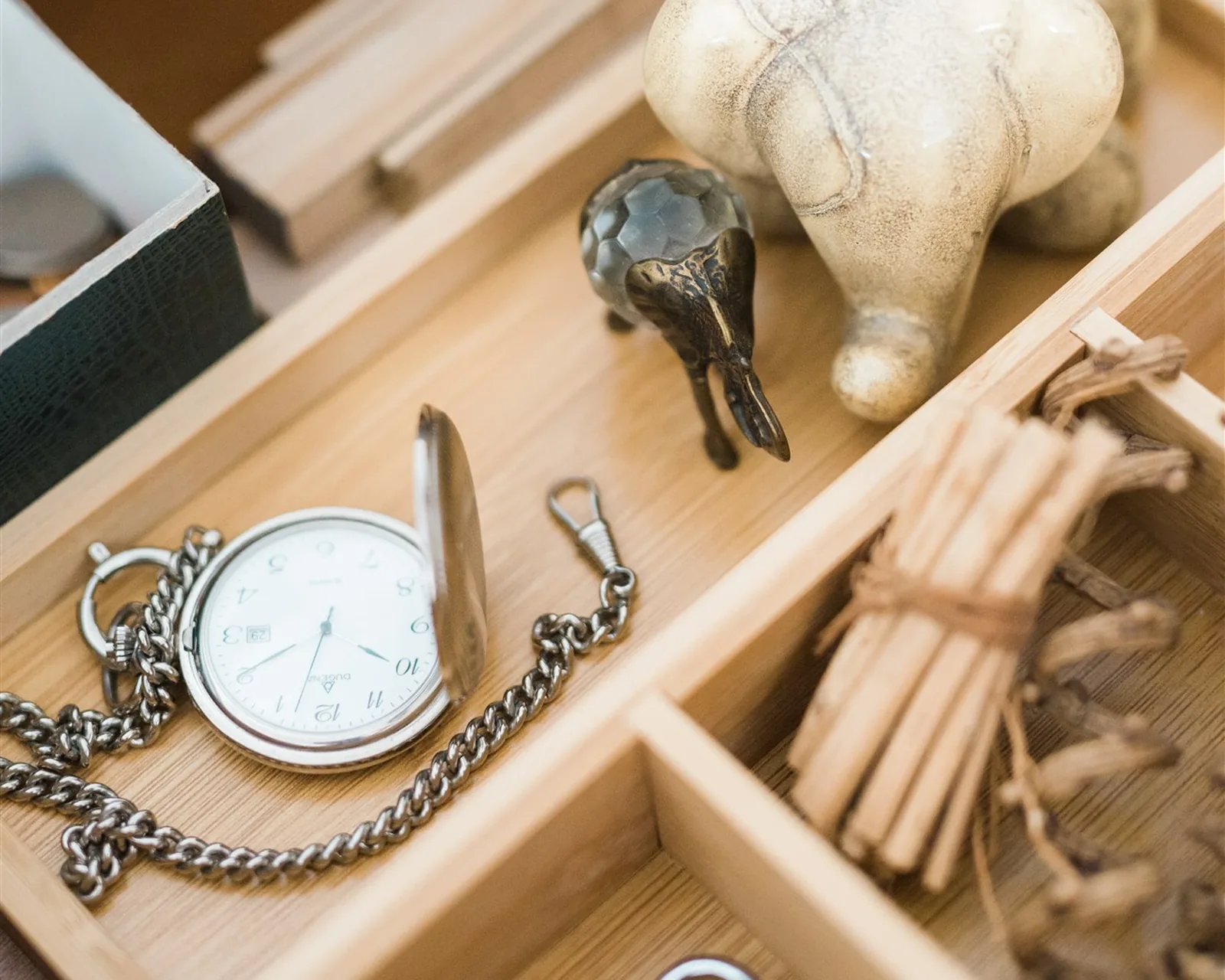
The largest category, with more than twenty subcategories. Everything belongs here, from the biggest picture you own to the smallest paper clip. The kitchen and the bathroom are komono as well, but they are large enough to be subjects of their own.
The list of all subcategories and the process are in the guide Komono — how to declutter and organize miscellaneous items.
Sentimental items
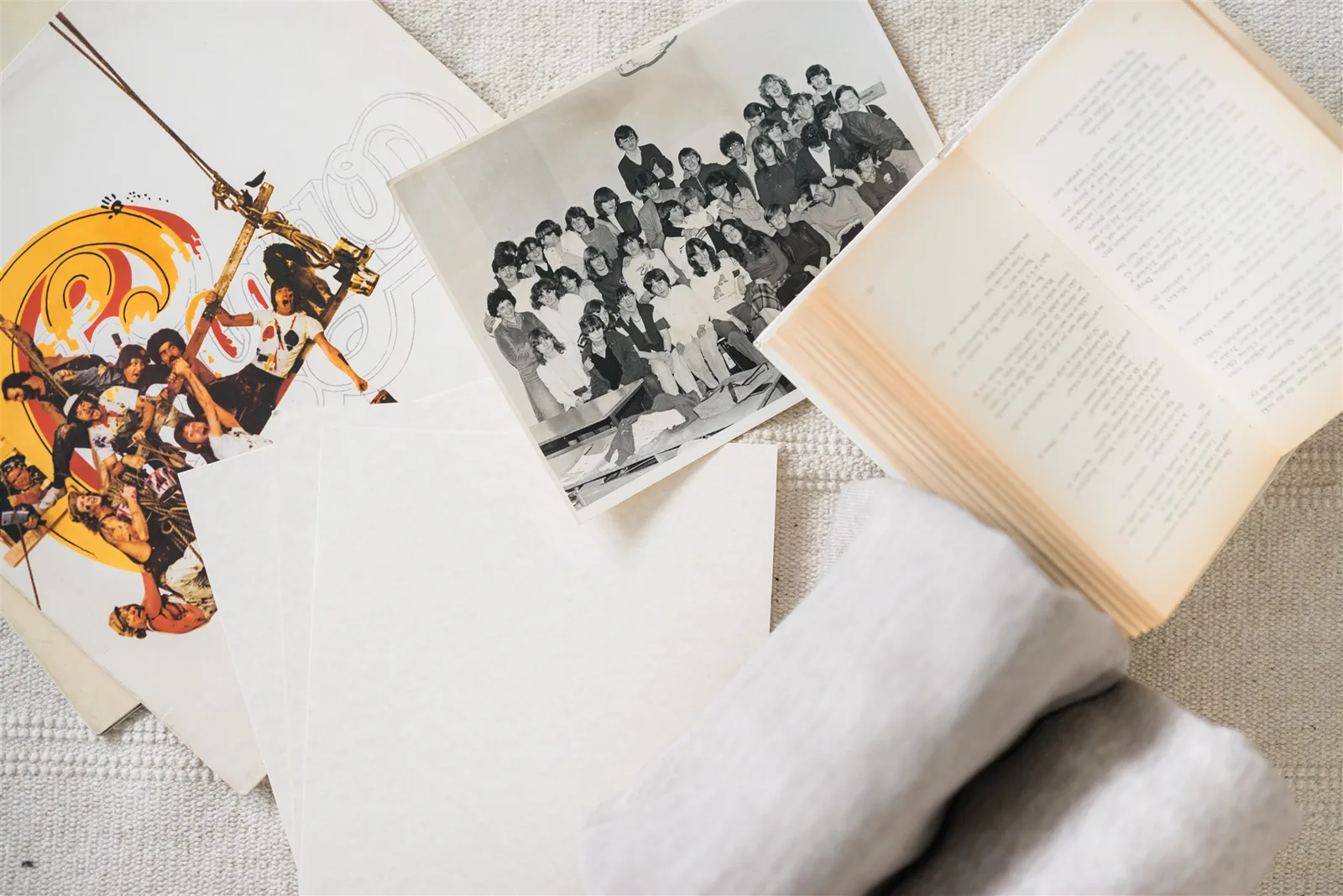
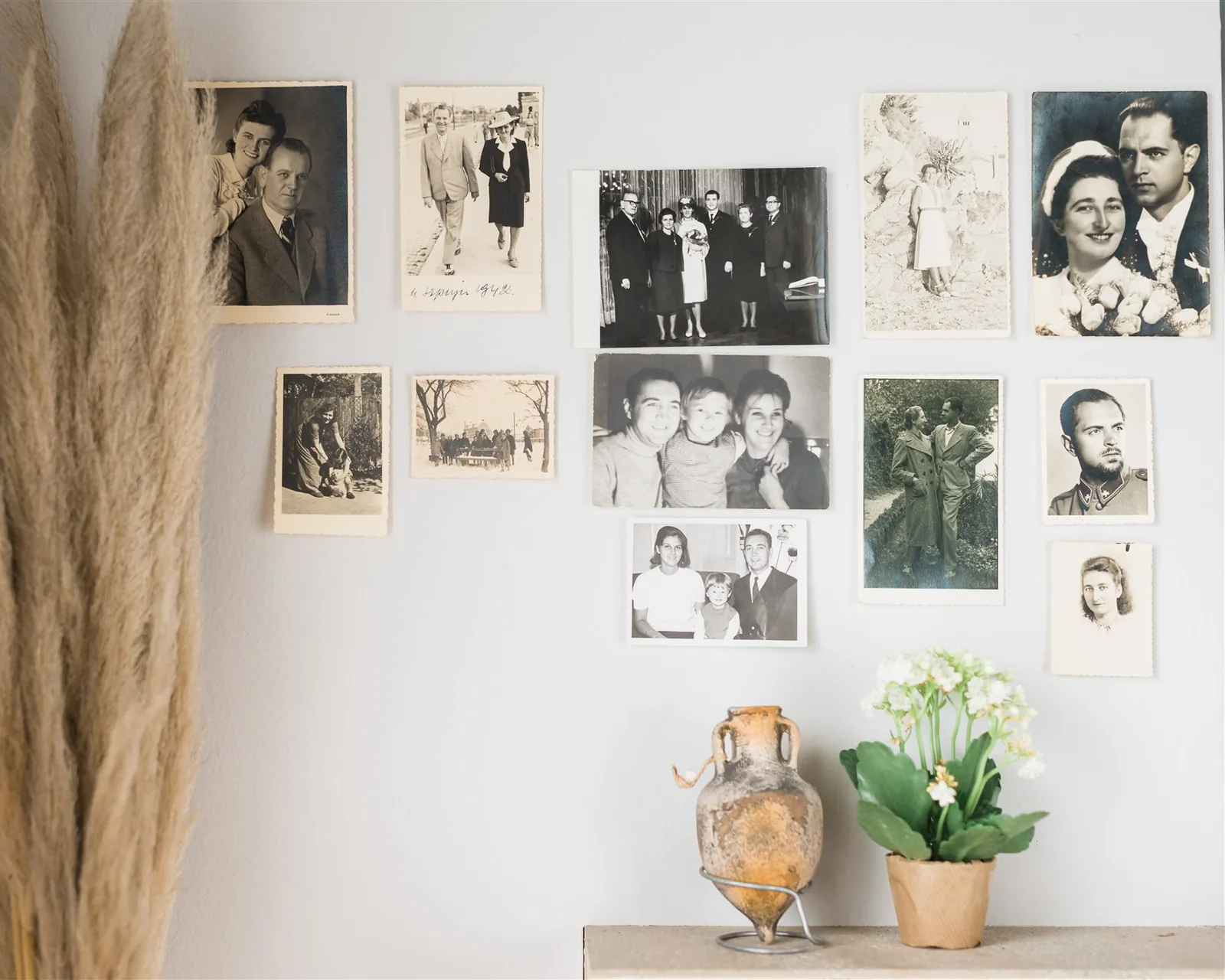
The last category is the hardest emotionally, because it holds everything that means the most to us. Throughout the KonMari festival it helps to keep a special box for sentimental items ready, in case you come across them along the way — a particular dress, or a book tied to a person or an occasion. The item goes into the box and waits for the end; we do not decide about it then.
Photographs are usually the hardest to part with, which makes them the last subcategory of sentimental items, and at the same time the last decluttering you will do.
The four main steps of decluttering and organizing

Prepare your space and your boxes
Decluttering is easier when the space and the boxes are ready in advance. Choose a large surface — a clean floor, a big table or a bed — where you can lay out the whole pile of items from one category.
I suggest preparing four boxes:
- items you decided to discard by selling
- items you decided to discard by donating
- items you are discarding to recycling because they can no longer be used
- items you are keeping after a repair — a lost button and the like
If one space is not enough, you can split subcategories between rooms, or make a pile of one subcategory and leave the rest in the closet for the next day.
The fifth box is for items you are unsure about — the ones you want to check once more at the end of the day, or, if it is clothing, try on when you have finished everything else. Never set those items aside somewhere loose, because there is a good chance they will find their way back into the closet. If you run out of time, they are already gathered in the box and waiting for you.
The sixth box is a decorative one, for items that spark joy but that you do not know how to use. At the end of the KonMari festival, when everything is decluttered and the space is ready to be furnished, we look at that box together and see how you could decorate your home with them.
Gather every item into one pile
Gathering all the same items from various places in the home or the workplace — every book you own, for instance — takes time. But this should be the last time you have to look for them.
The shock of seeing a whole category in one place is one of the key reasons the method works. Not only do you see whether the quantity is reasonable, the decluttering itself becomes far more effective: you can give those items a permanent place straight away and never search for them again.
The joy check
When something sparks joy, you should feel a little thrill, as if the cells in your body are slowly rising. — Marie Kondo
Four measures not to be confused with sparking joy:
- functional — a sweater that is still wearable
- informational — a useful book
- emotional — a gift from your husband
- rarity — a figurine from a favourite band, a limited edition
When an item has a history, or you know it is in good condition and might be needed later, letting go can be extremely hard. That is when it is essential to look at it through a child’s eyes: do you feel excitement and delight when you hold it and look at it? Would you buy it if you had never seen it before and walked into a shop and found it?
When you are torn, there are three possible reasons:
- the item once sparked joy but has fulfilled its purpose
- it does spark joy, but you do not recognize it yet
- you have to keep it whether or not it sparks joy — contracts, clothing and special-occasion items
The first two cases we solve by keeping the item with confidence — storing it where you always see it. Keep the shirt at the front, at eye level. After a short while one of two things will happen: either it will bother you because it does not spark what the other shirts do, or it will blend in perfectly and you will be glad it is still yours. Either way you will know what happens to it, and the doubt disappears.
In the third case, the joy needs to shift to the purpose of the item. If something makes your day easier and is functional, like scissors, that is a form of joy too. Such an item deserves gratitude, because it saves you time and effort.
How to store and organize your items
Storage rests on four principles. If all four are hard to remember, focus on the first two — you will quickly find you use much less space, and that the inside of your drawer is in order.
Fold it
Fold anything soft or flexible. Not only clothing, but gloves, komono made of cloth, plastic bags and laundry nets. The item becomes smaller, and more of it fits into the same space.
Stand it upright
Anything that can stand on its edge without falling should be stored upright, rather than lying flat in a drawer. That includes folded clothes, stationery and medicines. Standing things upright uses the full height of the storage space and lets you see everything at a glance and take out or return one item without disturbing the rest.
A pile, on the other hand, leaves the things at the bottom crushed, unusable and often out of sight. Towels are the exception, because they are taken from the top down, unlike t-shirts, which we usually pick from the middle.
Keep related items together
If you share a home with family, sort things by person, category and type of material. It would be easier, for instance, if not all the towels lived in the bathroom, and each person’s towels lived in their own room, in one spot in the closet.
Divide storage into square compartments
Homes are made up of rectangular spaces, so whenever you can, choose square boxes rather than round ones. Stacking one item on another leads to clutter: a pile can grow indefinitely, and you never notice that it is time to declutter.
Questions people ask about the KonMari method
How long does a KonMari festival take?
As long as your home and your pace need. For an average-sized flat that is usually a few months of work in sessions of several hours, not a single weekend. The method asks you to go through everything once and all at once, but “all at once” means in one unbroken process, not in one day.
Do I have to go through the categories in order?
The order is the most important part of the method and I recommend following it. It is not arbitrary — it builds your ability to recognize what sparks joy, from easier to harder. If you start with photographs, the decisions will be far harder, because you have not built that ability yet.
Can the KonMari method work in a small flat?
It can, and in a small flat the difference shows most. The method does not ask for more space but for fewer things you do not want, and the storage principles — folding, standing upright and square compartments — are exactly the ones that get the most out of a small drawer.
Will I have to get rid of a lot?
No. Quantity is not the goal and nobody sets you a number. You decide, item by item, by whether it sparks joy. Some people end up keeping most of their things; the difference is that now they know why they have them and where they belong. More answers are on the frequently asked questions page.
Read it all and still not sure where to start?
That is the most common place for people to get stuck. Book a free 20-minute call and we will look together at where to begin.