
How to organize a closet
What goes on the upper shelves, what goes at the bottom and how to set up drawers —
an arrangement that keeps itself
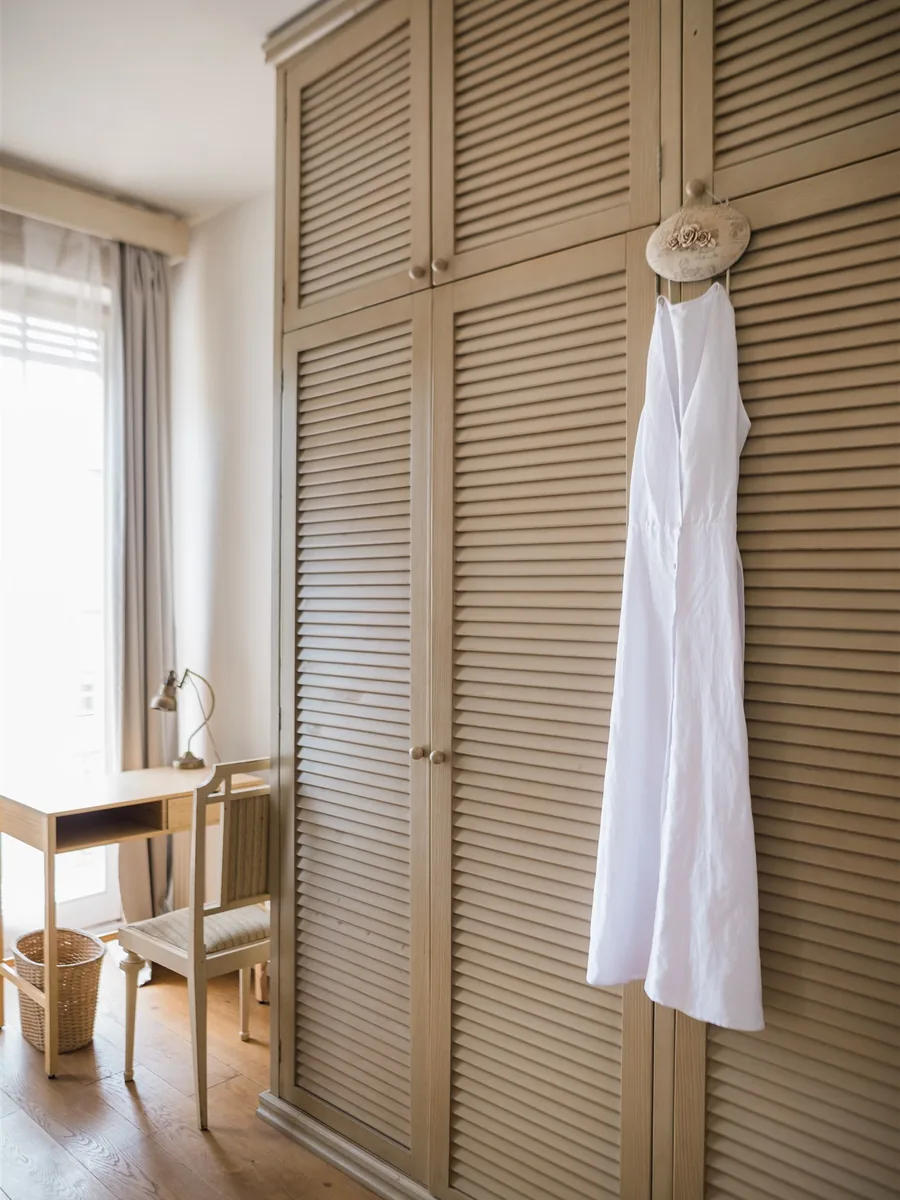
No two closets are alike. One person has a built-in wardrobe up to the ceiling, another a single free-standing one for the whole family, another a walk-in room. So these are pointers rather than rules — use whatever suits your space.
One thing holds for everyone: a closet is arranged only after decluttering. Until you know what stays, every arrangement is guesswork. Work through the clothes category first, and only then decide where things go.
For the order of the categories and the whole process, read the complete guide to the KonMari® method.
Arranged by height
Upper shelves
Everything you rarely touch goes up. That means items from the komono category (miscellaneous items): off-season clothing, bags, hats, hiking and skiing equipment, ornaments and seasonal decorations.
Linen and table linen go on the highest shelf, away from moisture and dust. If a shelf is particularly high, use it fully and stack two boxes of folded clothing, one on top of the other.
The bottom of the closet
The bottom is reserved for big, heavy things: suitcases, musical instruments and electrical appliances such as fans and heaters.
That way you are not lifting heavy things above your head, and nothing comes down on your hands when you open the doors.
Drawers and boxes
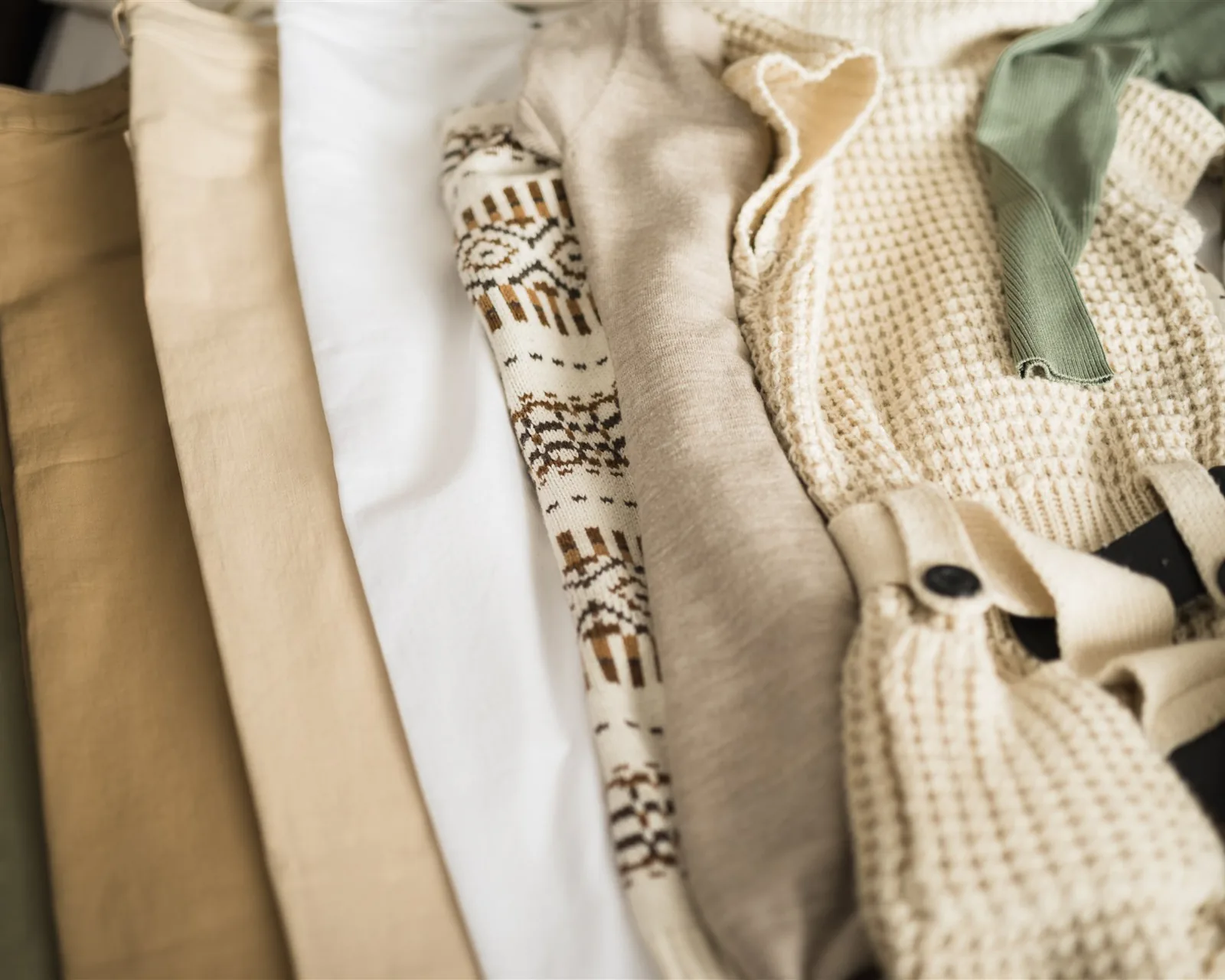
Fold as much as possible, preferably into drawers and then into boxes. Folded clothes take up far less room than hanging ones, and you see them all at once, without moving anything aside.
- In a chest of drawers, the lightest goes in the top drawer and the heaviest in the bottom one.
- Keep bra straps, ties and buttons in small boxes, so they do not tangle with everything else.
- Choose square boxes, because closet space is made of rectangles and square boxes leave no lost corners.
A full closet and nothing to wear
A free 20-minute call is the easiest first step. We go through your situation, with no obligation at all.
What the closet looks like inside
Matching hangers
Of all the small things, matching hangers change the look the most for the least money. When they are all the same height and thickness, the clothes line up and the closet suddenly feels calm.
You do not have to buy new ones. It is enough to keep one kind you already own in sufficient number and set the rest aside.
The closet is an extension of the room
Decorate the inside of the closet. That space is much like a room and deserves to be treated as one — a scented sachet, nice paper on a shelf, a photograph on the inside of the door.
It sounds like a detail, and it changes how every morning feels. A closet you find beautiful is opened differently from one you merely put up with.
If you share the closet with a partner or a child, make sure each of you has their own part. It does not have to be equal in size, but it has to be clearly theirs. Shared space without boundaries is space nobody maintains.
Off-season clothes
The best solution is not to store off-season clothes at all. What we put away we either forget about, or we settle for something else, because getting the box down from the top of the wardrobe takes effort.
With the abrupt changes in the weather this is slowly becoming a necessity too. It happens more and more often that a lighter jacket is needed in the middle of November, and a jumper in the middle of May.
If you do have to store things away, do not create many subcategories. It is enough to group similar with similar and write on the box what is inside.
Questions that keep coming up
Should I empty the closet first?
Not the whole closet — one category. Bring every piece of clothing in your home to one place, go through the joy check, and only then arrange. What you can do is carry on with the other categories that come out of the closet — bags, linen, off-season things — so that in the end you will have emptied it and arranged it again around the categories you actually have.
What if I share the closet with my partner?
Each of you gets a part of your own, clearly separated. The split does not have to be in half — what matters is that it is clear. When space is shared and has no boundaries, nobody feels it is theirs and nobody maintains it.
Is it worth buying matching hangers?
It is, and it is the cheapest change with the biggest effect. But only after decluttering, when you know how many you actually need. Bought in advance, they usually end up as one more surplus thing.
Should I buy boxes and organizers?
Not before you declutter. Most people discover that what they already have at home is enough — shoe boxes, gift boxes. Once you know the exact number and size of things, you buy once and buy right.
Want a closet that keeps itself?
Arranging is easier when someone goes through the whole category with you. Book a free 20-minute call and we will look at where to start.