Natural homemade liquid soap
A potassium hydroxide recipe —
a different ending and more patience than bar soap
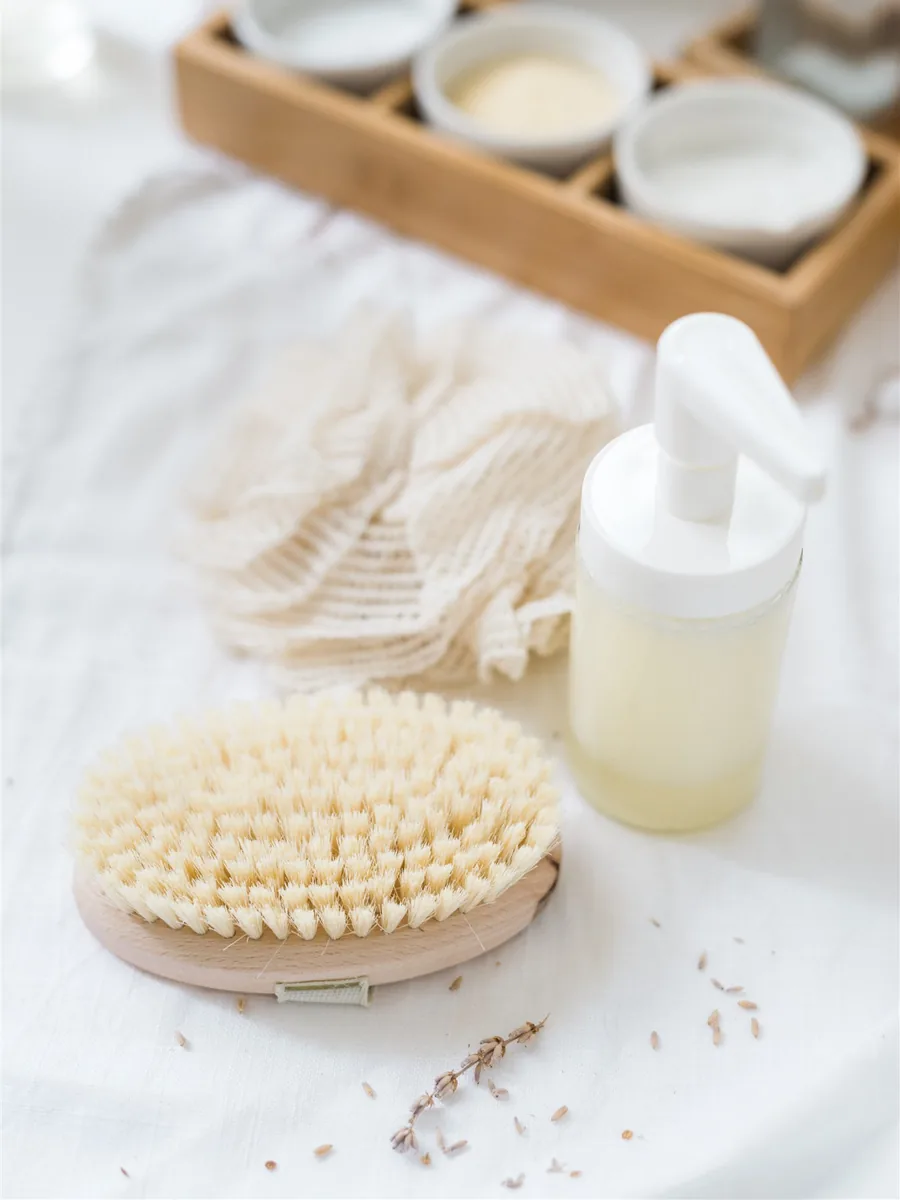
Liquid soap is made with potassium hydroxide (KOH) rather than sodium hydroxide, which is why it ends differently: no mould and no cutting, but a double boiler and dilution with water.
It also asks for more patience. With potassium hydroxide the trace takes between one hour and an hour and a half, while with bar soap it is a matter of minutes.
If you are making soap for the first time, the guide comes before this recipe: safety, equipment, and what the trace is.
The recipe
Ingredients:
- Olive oil — 455 g / 16 oz
- Sunflower oil — 400 g / 14 oz
- Castor oil — 45 g / 1.58 oz
- Lye, potassium hydroxide (KOH) — 160 g / 5.64 oz
- Distilled water — 489 g / 17.25 oz
- Boiled distilled water for diluting at the end — 2194 g (77.39 oz) + 500 g (17.63 oz) = 2694 g / 95 oz
- Lye discount — five per cent
Before you weigh anything else, weigh the empty pot the oils will go into and write the number down. Mine is 1194 g / 42.12 oz. You will need it at the end, when working out how much water goes into the dilution.
Weigh the ingredients
Weigh the distilled water
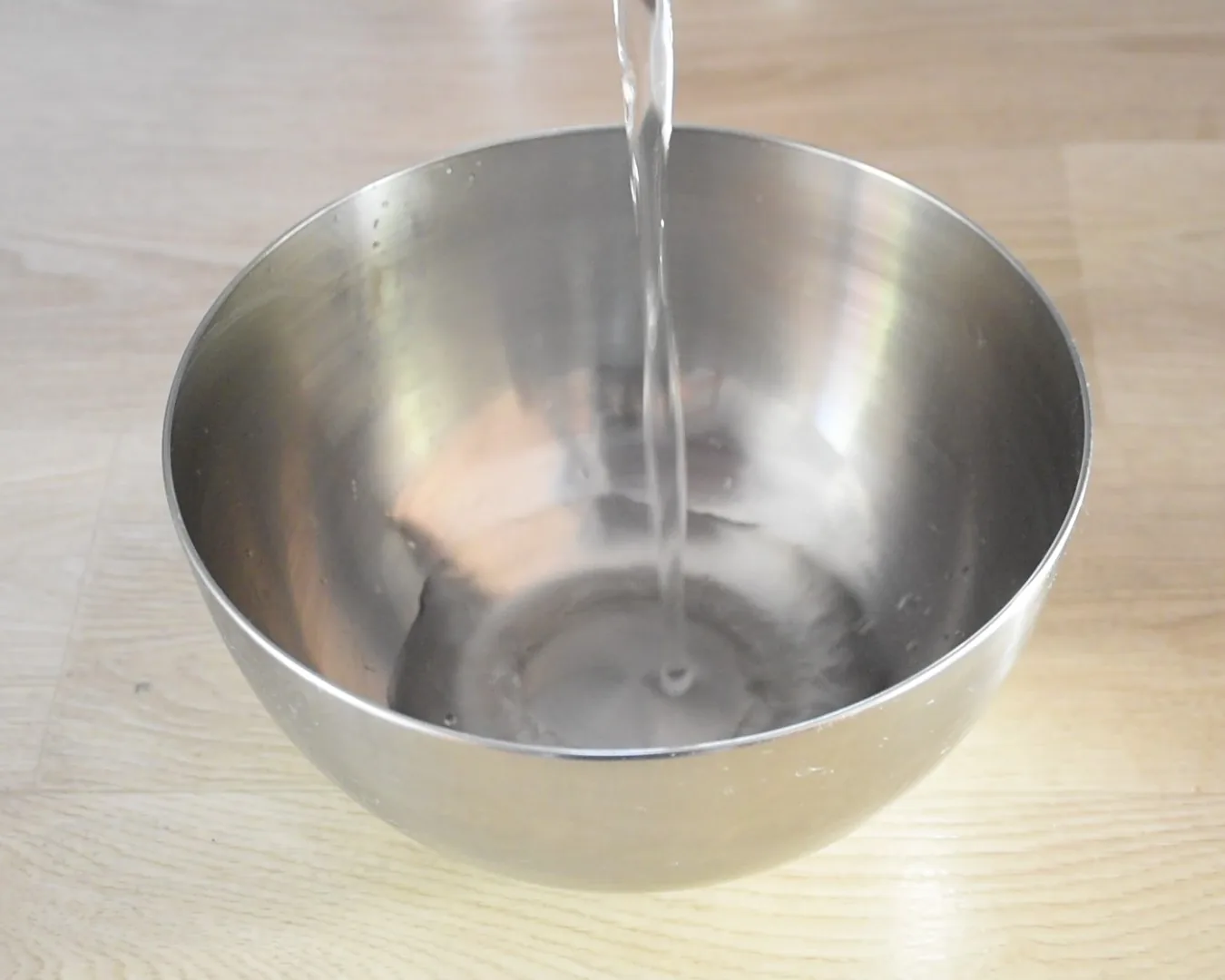
Weigh 489 g / 17.25 oz of distilled water into a bowl.
This is not the water the soap is diluted with at the end — that one gets boiled and weighed only once the soap is finished.
Weigh the lye
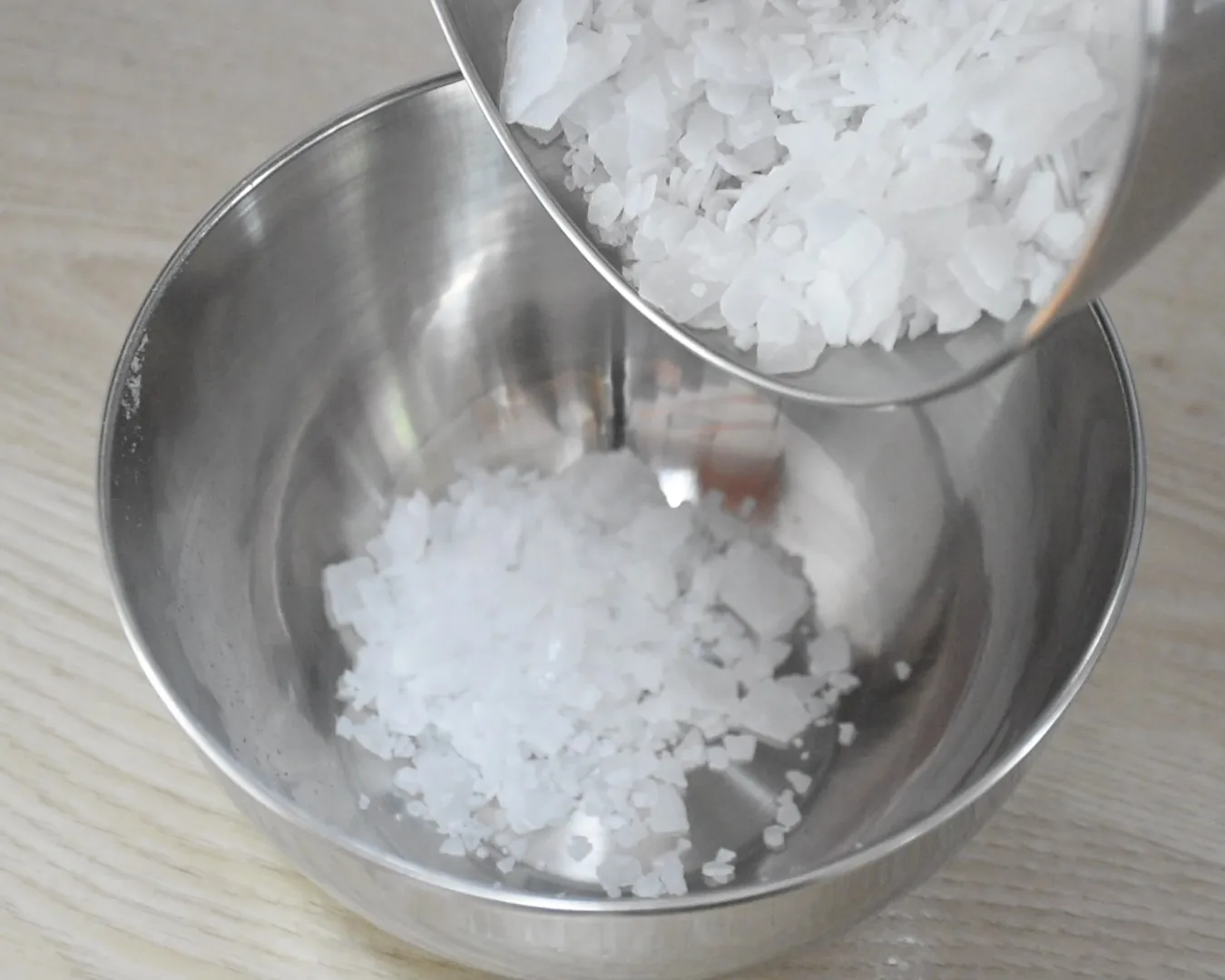
Weigh 160 g / 5.64 oz of potassium hydroxide into a separate bowl.
From this point on wear goggles, a mask and gloves, and keep them on until the equipment is washed.
Weigh the oils
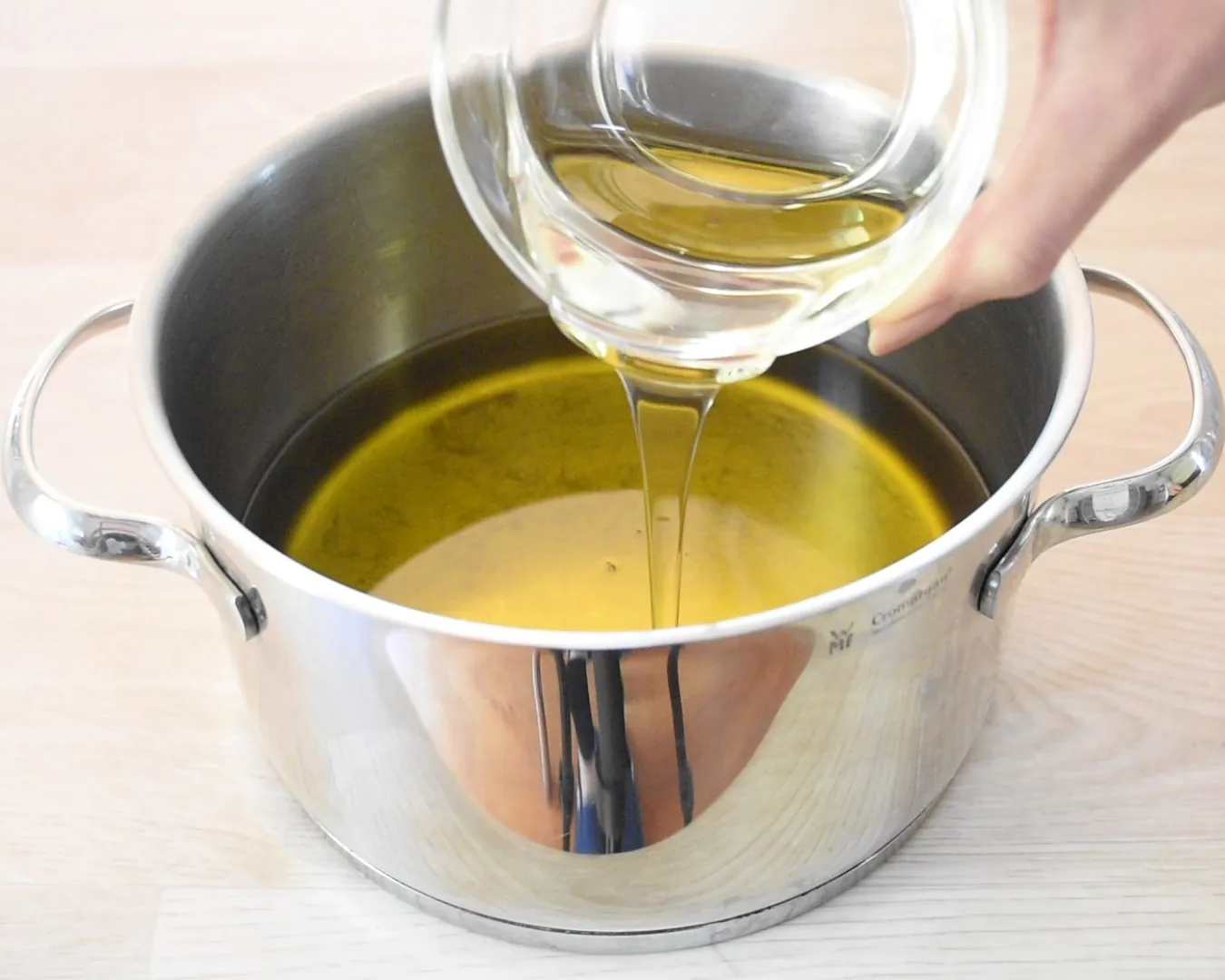
Weigh all three oils into the pot you weighed earlier: 455 g olive, 400 g sunflower and 45 g castor.
Zero the scales before each oil so the amounts do not add up on top of one another.
Make the soap
Pour the lye into the water
Slowly pour the lye into the water. Never the other way around, as it can provoke a violent reaction. Work near an open window and keep your face away from the pot and the fumes.
Stir a few times with a plastic or stainless steel spoon until the lye dissolves in the water.
Match the temperatures
Let the lye solution cool to between 30 and 50 °C / 86 and 122 °F, and heat the oils to roughly the same temperature. A difference of up to eight degrees is fine.
Combine and blend to a trace
Pour the hot lye solution into the oils. Blend for one minute, let it rest for ten, and repeat.
The trace you are after here looks like pudding, and it takes between one hour and an hour and a half.
Cook the soap in a double boiler
Put the pot with the soap inside a bigger pot and fill the bigger one with water up to the level of the soap. Cook for one and a half to two hours, stir occasionally, and keep topping up the water in the big pot.
Check whether the soap is done
Take a little soap on a spoon and taste it lightly with the tip of your tongue. If you feel something like a small electric shock, the soap is not ready. If you only taste something strange, it is done.
Decide how much to dilute
Now you choose between two options:
- Store the larger part of the soap in a jar for later and dilute the smaller part with water straight away.
- Dissolve all of the soap in water at once.
Dilute the soap
Weigh the pot with the soap and subtract the weight of the empty pot from the preparation: 2657 g − 1194 g = 1463 g / 93.72 oz − 42.12 oz = 51.6 oz.
To get the amount of water for diluting, multiply the soap weight by 1.5. Slowly add 2194 g / 77.39 oz of boiled water, trying not to make foam, and leave it overnight.
The next day stir the soap until it is completely liquid, adding more boiled water if needed, up to 500 g / 17.63 oz.
Store the soap
Store the finished liquid soap in a demijohn.
Where to go next
Bar soap is quicker and needs less equipment. The simplest is the castile soap, made almost entirely from olive oil, while colour and herbs come into it in the rosemary soap and the coffee and cocoa soap.
Every text about living with less waste sits on the zero waste page.
Want less plastic in the bathroom?
I offer zero waste consultations in Zagreb and the surrounding area. Book a free 20 minute call and we will look at where to begin.