Papers — how to declutter and organize documents
Four steps, three kinds of paper and seven questions —
storage that stops the pile from growing back
Papers end up everywhere — at home and at work. With them a completely different mindset helps: start from discarding everything. With that rule you keep only what truly matters, and in today's digital world that is usually very little.
It is not only a saving in space. It is also the better decision for the environment, because paper we do not keep without reason goes to recycling instead of into a box on top of the wardrobe.
Papers are the third category in the KonMari® method, right after books.
Four steps to sorted papers
Prepare the space and one box
Choose a place where you can gather all your papers. For this category the dining table works best, though the floor or a bed in the bedroom serve just as well.
Unlike the other categories, here you only need one box — the one for papers that are leaving. Papers are not sold, not repaired and rarely donated, so there is no need for four destinations.
Gather all the papers and make a pile
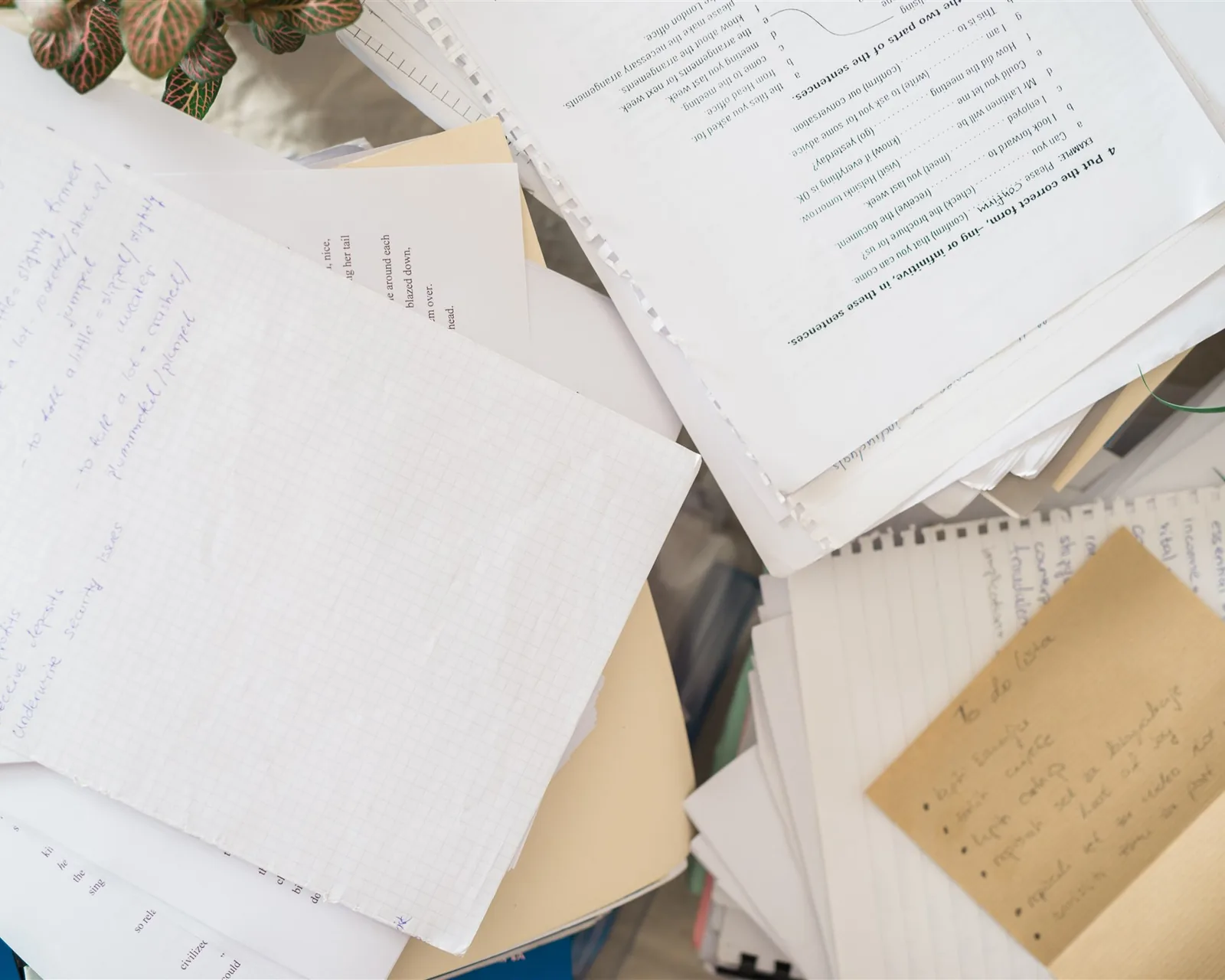
It matters that you gather every paper in the household. From birth certificates and diplomas down to the smallest note.
As you build the pile, sort the papers into three main subcategories:
- Pending — papers that need action within the next few days or weeks: bills, forms, letters, notes.
- Frequently accessed — contracts, recipes, instructions, current projects.
- Infrequently accessed — birth and marriage certificates, wills, warranties, greeting cards.
At this stage you are only sorting, however out of date some of the papers may be. The decisions come in the next step.
The joy check
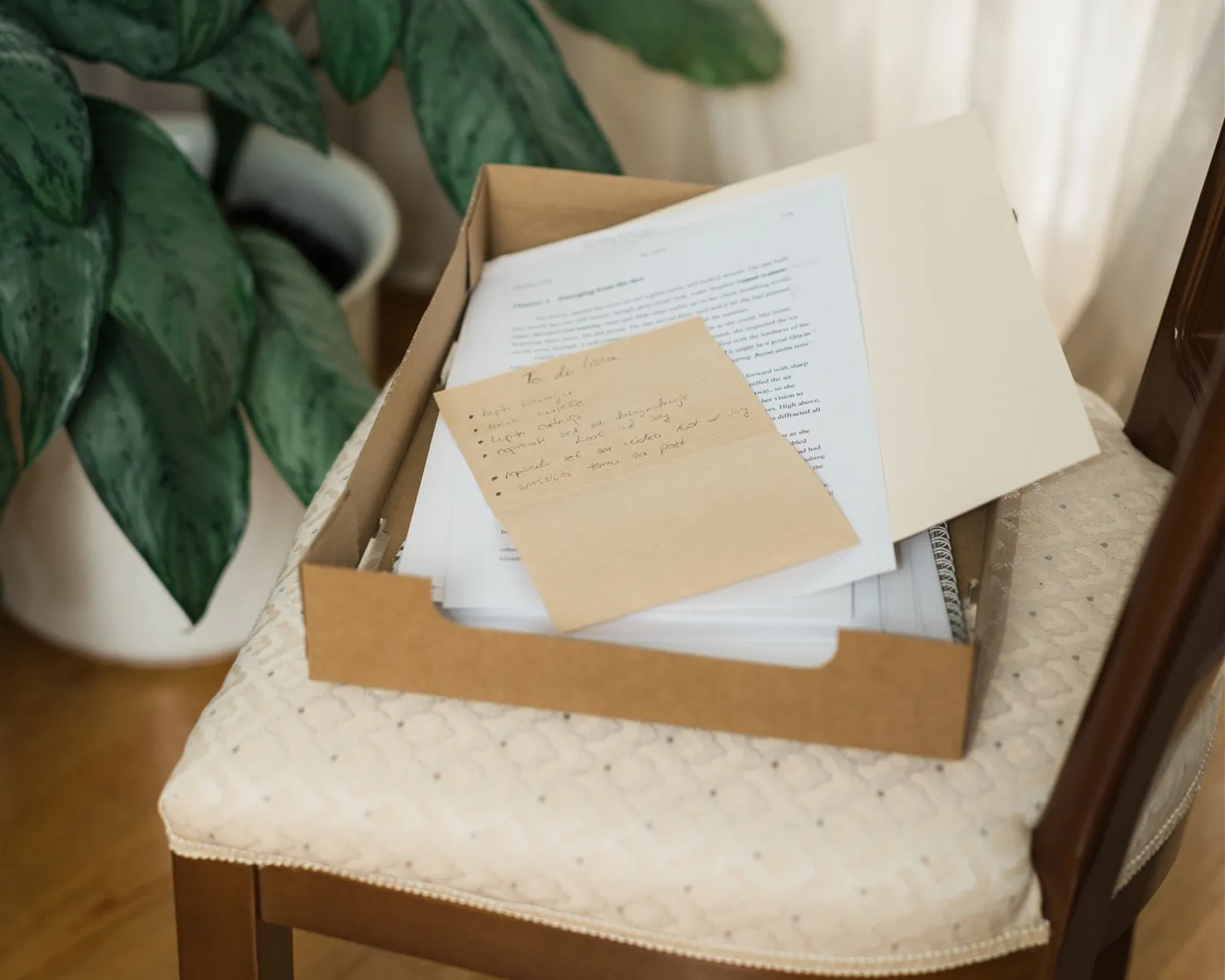
The basic rule with papers is: discard everything. It does not mean you will actually throw it all away, but that you approach the papers as though the decision to let them go has already been made, and look for the ones worth keeping.
That reversed direction is the key. Start from the question of what you need and you will keep far too much. Start from the assumption that everything goes, and you end up with exactly as much paper as you truly need.
Begin with the pending papers, with manuals as a subcategory, or with notes you no longer need.
Manuals — let them go. Almost all of them are online or available from the manufacturer. If you are someone who genuinely uses manuals, keep them, but tear out the sections in languages you do not speak.
Card statements and pay slips — replace them with electronic versions, except for the ones you need for year-end tax preparation.
Seminar and course materials — the knowledge was received at the seminar itself, from the teacher and from the group. To say a seminar succeeded, we have to put what we learned into practice. That much material acts as a safety net and is exactly what prevents us from using what we already know.
Greeting cards — once you have read them, their main purpose is fulfilled. Keep only the ones that spark joy. If there are many, handle them together with sentimental items.
Warranties — keep them in one single, well-organized file. Do not divide them into subcategories, because that only leads to accumulation. They are used once a year, so there is no sense in spending space on several files, and while you look for one you will see which ones have expired. Keep the receipt and the warranty together.
If the decision is hard, these questions will guide you through the joy check:
- When do you need this?
- How long have you had it?
- How often do you go back to it?
- Can you find the same content online?
- Have you already saved it on your computer?
- How much of a problem would it be not to have it?
- Does it spark joy at all?

If you are afraid to simply throw a paper away because of what it contains, burn or shred it. Burning is not the best choice for the environment, but with papers that stood for something big, or belong to a difficult time in your life, it can be surprisingly freeing. It can be the final release that closes one chapter and opens another.
Thank the papers you let go. This is the last and important part of the joy check. They were an extremely useful tool at the moment you needed them. If you do not manage to thank each paper separately, hug the whole box instead.
Papers pile up faster than anything else
A free 20-minute call is the easiest first step. We go through your situation, with no obligation at all.
Storing papers
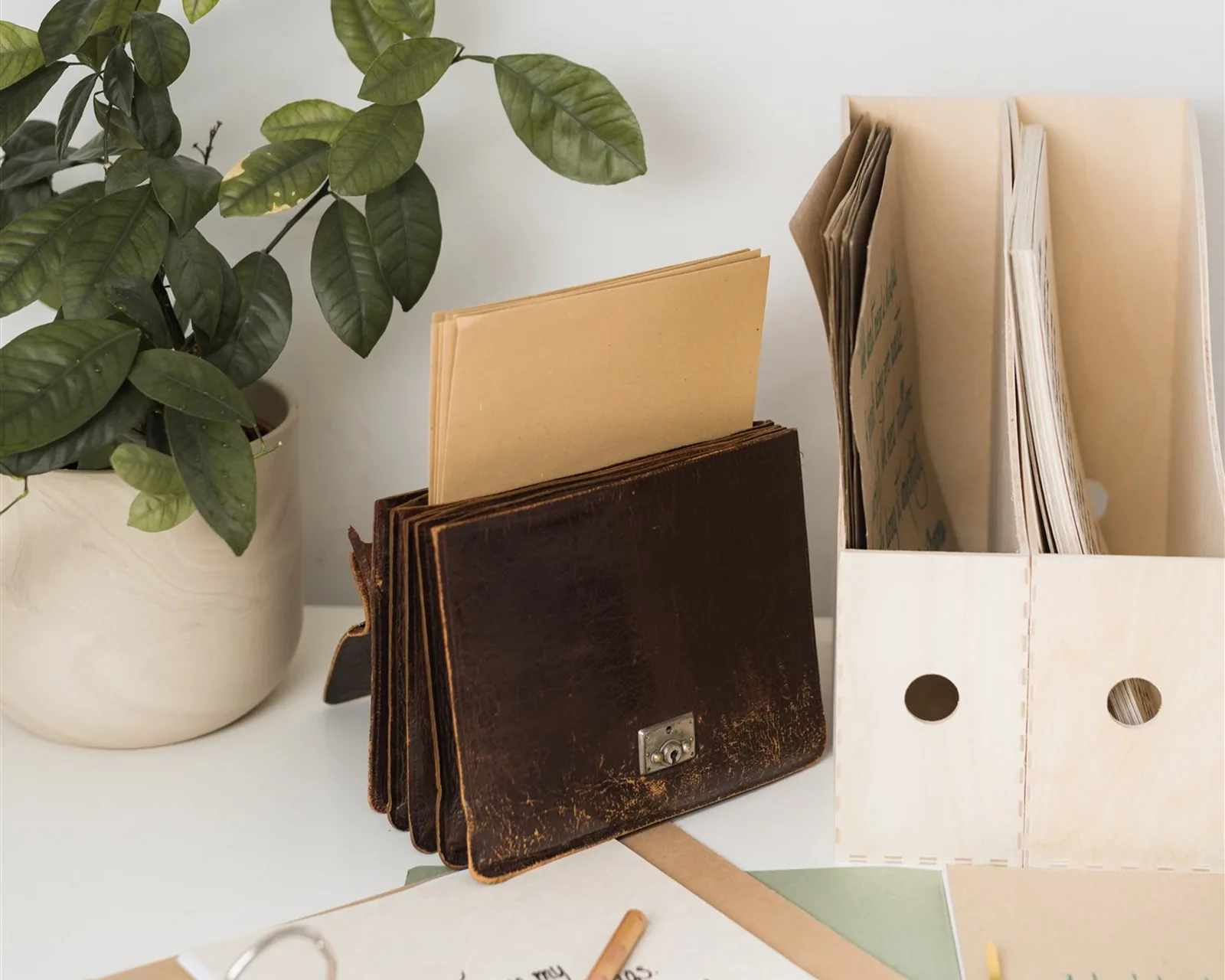
How to store papers
The same three subcategories from the second step now become the storage system.
- Pending — upright in a magazine file, and gone through once a week.
- Frequently accessed — in file folders, an accordion file or a display book with clear pockets, sorted by topic.
- Infrequently accessed — in a register folder or accordion file, somewhere you do not have to reach often.
Choose folders and files that genuinely spark joy for you or hold a special meaning. The leather accordion file in the photograph belonged to my great-grandfather. Today we keep the infrequently accessed papers in it.
Go through the pending papers once a week. It helps to set a fixed day — for me it is Sunday morning with a cup of my favourite drink. When you are done, each paper either goes into the box or moves into one of the other two categories.
If a whole family lives in the home, give each person one box for pending papers, no more. Keep it in the entrance way, so every paper that comes into the house stops there and goes no further. If the entrance is not an option, the kitchen or any other room does the job. All that matters is that every new piece of paper goes straight into that box until you sit down and go through them.
Papers that are really keepsakes
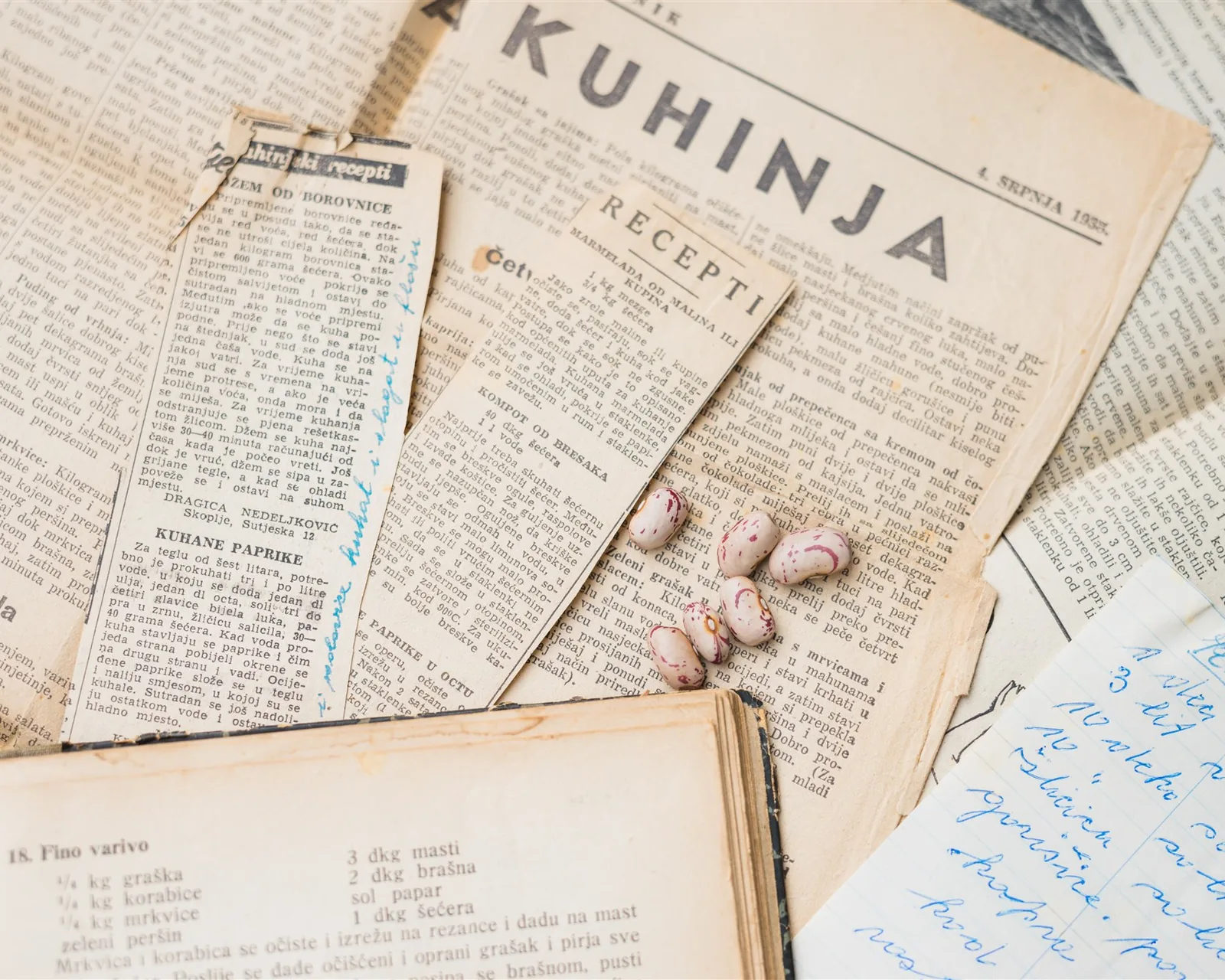
Clippings, recipes and greeting cards
Some papers are not documentation but memory. Recipes cut out of a newspaper, greeting cards, a clipping about someone who matters to you. The recipes in the photograph are my great-grandmother's — some cut from newspapers, some copied out by hand.
Move those into a display book with clear pockets or into a scrapbook of your own. That way they stay in one place and you can actually look at them, instead of having them wait in drawers.
If there are many, leave them for sentimental items, the last category. Decisions about them come more easily at the end of the process, once your eye for joy has had practice.
Questions that keep coming up
Why do papers start from the rule “discard everything”?
Because papers do not carry emotional weight the way clothes or books do, but they carry something worse — the feeling that they “might come in handy”. Start from the question of what you need and you will keep almost all of it. Start from the assumption that everything goes, and you end up with exactly as much as you truly need.
What about manuals?
Almost every manual today is online or available from the manufacturer, so you can let them go without worry. If you genuinely use manuals, keep them, but tear out the sections in languages you do not speak — usually two thirds of the booklet.
Should I keep warranties and receipts?
You should, but in one single file, without dividing them into subcategories. Warranties are used once a year, and while you look for one you will see which have expired, so the file thins itself out. Keep the receipt and the warranty together, because one without the other is usually worth nothing.
Where do I keep the papers that keep arriving?
In one box per person, ideally in the entrance way. Every paper that enters the home then stops in one place instead of spreading through the flat. Go through the box once a week, always on the same day, and each paper either leaves or gets a place of its own.
Papers all over the flat?
With papers the hardest part is the first pass; after that the system keeps itself. Book a free 20-minute call and we will look at where to start, together.