What is the zero waste movement
The official definition, the five rules and the small decisions that add up —
without the drastic changes people abandon in the first week

Zero waste is a movement whose purpose is to live in a way that produces as little waste as possible. A rate of a hundred per cent is out of reach, but we can come remarkably close.
The aim is to choose products made of environmentally sound materials that last a long time and are simple to maintain. When their first purpose runs out, we look for a second one — part of the same effort to keep them away from landfill.
This text opens the zero waste group because it explains the ground the rest stands on. The recipes that follow — kitchen replacements, cleaning products and soaps — are all applications of what is written here.
The official definition
The conservation of all resources by means of responsible production, consumption, reuse and recovery of all products, packaging and materials, without burning them, and without discharges to land, water or air that threaten the environment or human health.
Governments and large corporations play the larger part in producing waste. Still, as the consumers who buy their products, we get to decide what we buy, where we buy it and how we use our own resources.
It can feel as though our decisions carry no weight, mostly because we never see the result. That is exactly what brought us here: because we did not see the consequences of our environmental choices, we are feeling them now. It is human and natural to react only to immediate danger.
When the changes are too big
When the conversation turns to the environment and what one person can do, three things come up most often: air and car travel, overpopulation, and veganism. To most people those adjustments feel drastic, and the usual response is to give up on all of it.
Public transport is nowhere near as good as it should be for the year we live in, so flying remains the preferred way to travel. Climate sits well down the list of reasons to have or not have a child, and rightly so. Changing an entire diet, one we have loved since childhood and that carries our fondest memories, for something we cannot even see, fails before it starts.
When we can see that a problem this complex is beyond solving in full, that is no reason to stop giving what we can.
What is within reach:
- A bicycle or a walk instead of the car, when the journey allows it.
- Wooden toys instead of plastic ones, and cloth nappies instead of disposable.
- One or two meat-free days a week — that alone is a considerable shift.
It also helps to have a second motive besides the environment: less meat for the sake of the animals, cycling for the exercise. Then the change has two reasons to stay.
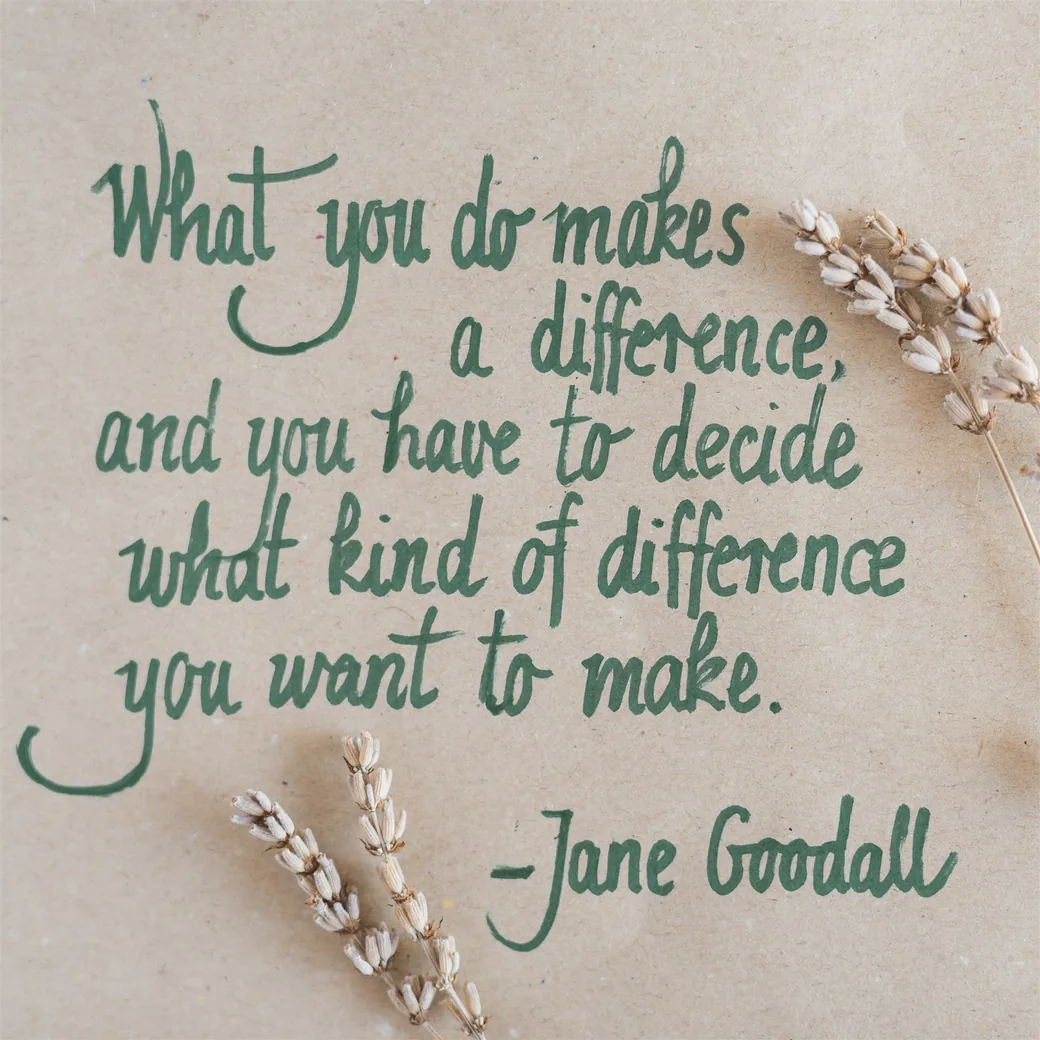
The quote is Jane Goodall: what you do makes a difference, and you have to decide what kind of difference you want to make.
Where waste shows the most
Single-use plastic
It turns up almost everywhere: carrier bags, water and juice bottles, toothbrushes, shampoo and deodorant bottles, packaged goods. The list is long, and the consequences are visible now that waste separation is required here.
Consider how much plastic your household discards in a single week, bearing in mind that plastic, unlike glass, is recycled in a negligible proportion.
Textiles and fast fashion
Zero waste encourages buying good clothing when you genuinely need it — from local makers, for long use, and made of natural materials wherever possible.
Flea markets and second-hand shops are there too. And before recycling, there is always the option of repairing a garment or finding it a new purpose.
The five rules of zero waste
The order is not accidental. Each rule comes into play only once the one before it has proved impossible.
Refuse
Say no to single-use plastic — shop bags, coffee shop straws, conference water bottles, promotional freebies and flyers. This is the only rule that prevents waste before it exists at all.
Reduce
Reduce how much you buy by staying aware of what you want and what you need. Do you truly need this item, and if so — what is it made of, is it well made, and is it easy to maintain? Well-made things last longer, which means replacing them less often and spending less.
Reuse
If something breaks, first see whether it can be repaired. If it cannot, see whether it can serve another purpose. Try looking at the object through a child’s eyes — its potential shows up fastest that way. Look online for ideas; you will be surprised how inventive people are.
Recycle
Separate your waste properly — paper with paper, plastic with plastic — so that as little as possible reaches landfill. Recycling sitting at number four is no accident: it is never the first option, only the last, once buying could not be avoided and no new purpose could be found.
Compost
Compost fruit and vegetable scraps. Some of us are lucky enough to have a garden or green space nearby. Composting in a flat is possible too, though it involves worms, so it is not for everybody. There is also the option of keeping scraps in the fridge or freezer until the weekend, when you go out into nature and — as I like to put it — feed her.
Small decisions add up
Our thoughts, intentions and actions matter, and they make a difference in every part of life. Whether we went for a walk today matters to the body, whether we slept well matters to the mind, and whether we said or did something we love matters to the heart.
What does not matter is how small the change is, only that we are making it. Once it all adds up, in your life and in other people’s, the outcome shows. We do not have to see it straight away to feel that we are making a difference at some level.
If for nothing else, then for our own peace of mind, which one way or another passes into the world around us.
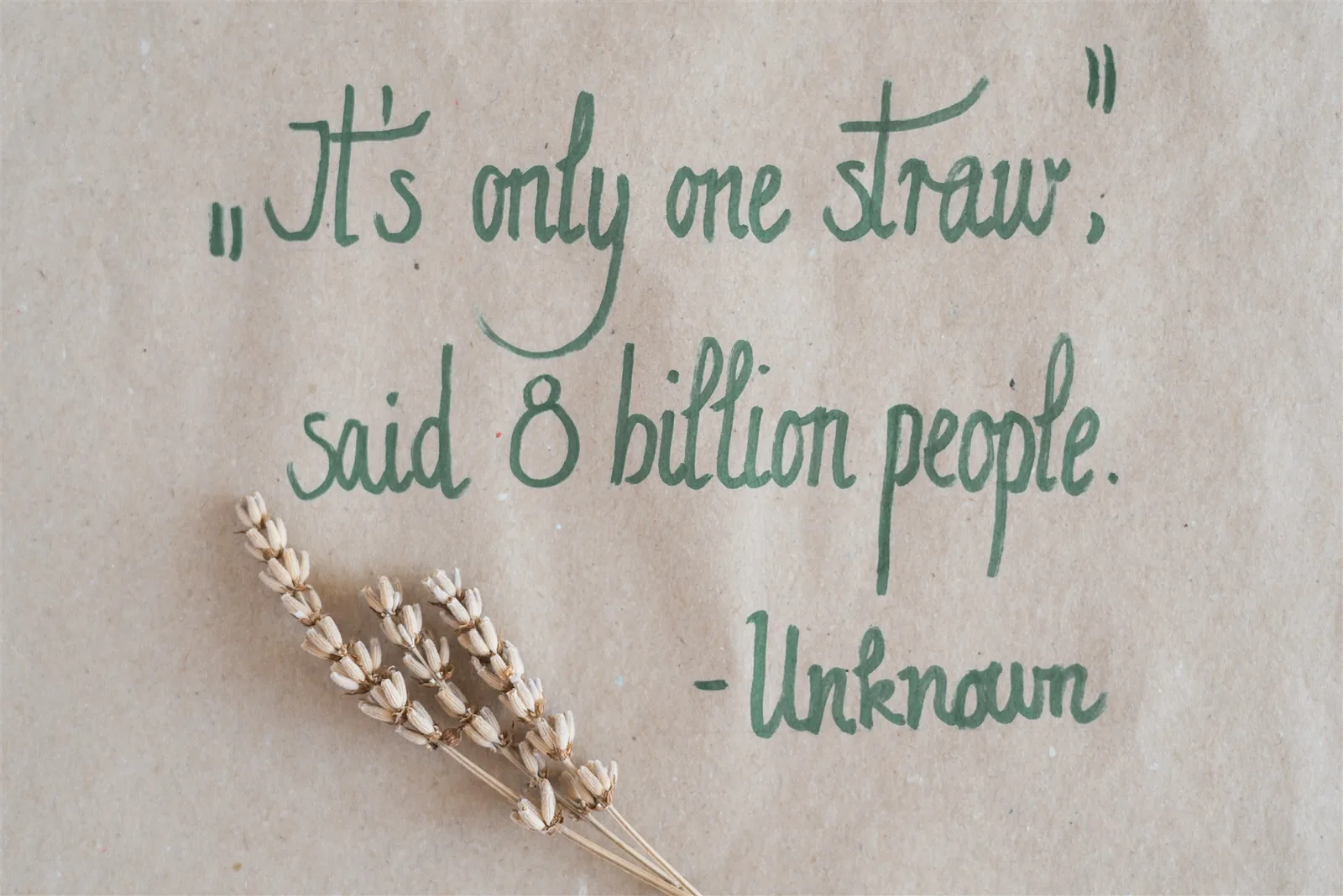
Quotes like this one are easy to skim past in a sea of similar ones, especially now, but they can always serve as a reminder. So I invite you to forget the other eight billion people for a moment and think only of a single straw — as one of the many decisions you go through every day.
With each of them, learn to value the quiet pride of being responsible over convenience and instant reward. In time, I promise, you will enjoy the “harder” decisions more and more.
Where to go next
Once you know why, the question becomes how. Begin with the six kitchen replacements — that is where the difference shows fastest at home. Every other text sits on the zero waste page.
If the home is full, decluttering comes before replacing — otherwise the new things simply join the old. I write about that in the KonMari guides.
Ready to start but unsure where?
I offer zero waste consultations in Zagreb and the surrounding area. Book a free 20 minute call and we will find your starting point.